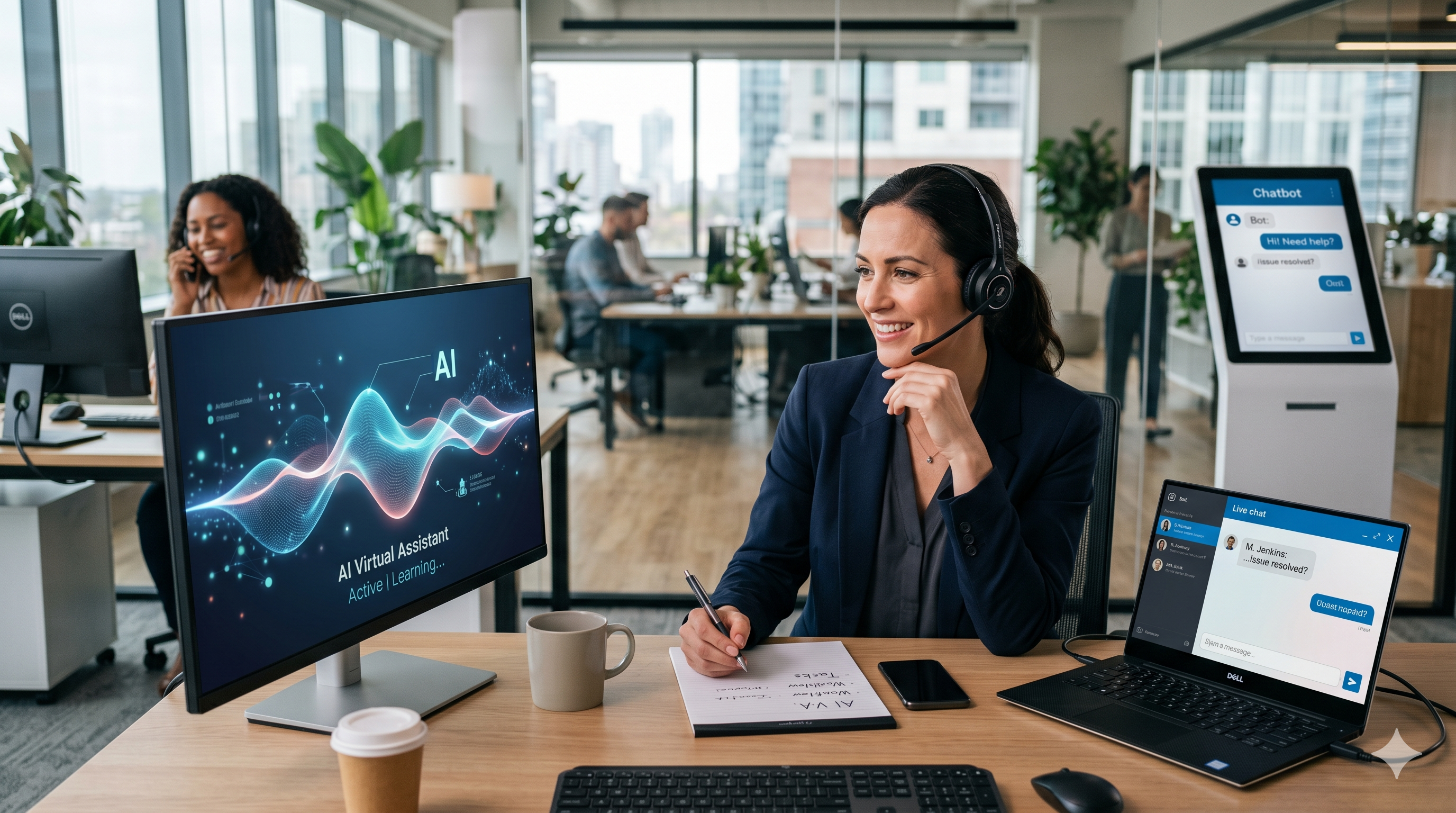
An AI virtual assistant is software that uses natural language processing and machine learning to understand a request, complete the task, and answer follow-up questions without a scripted menu. Unlike a basic chatbot, it learns from past interactions, handles multi-step problems, and hands off to a human agent when a query needs judgment.
Most articles about AI virtual assistants open with a market-size forecast and the claim that automation is the cheap option. The current data is more interesting than that.
Gartner predicts that by 2029, agentic AI will autonomously resolve 80% of common customer service issues without human intervention, cutting operational costs by 30% (Gartner, March 2025
). In the same breath, Gartner also forecasts that generative AI cost per resolution will exceed $3 by 2030, higher than many B2C offshore human agents, as data centre costs rise and vendors shift from subsidised growth to profitability (Gartner, January 2026
).
Both can be true at once. AI will handle far more of your volume, and the per-resolution price of doing so is going up rather than down. That makes the question less “should we automate?” and more “which requests are worth automating?” This article covers what an AI virtual assistant is, the technology behind it, where it fits, and how to tell it apart from the tools it gets confused with.
LiveAgent is our product; this guide covers it alongside other named tools.
What is an AI virtual assistant?
An AI virtual assistant, also called an artificial intelligence personal assistant or digital assistant, is a software application designed to carry out tasks or offer services for individuals and businesses. These assistants use advanced technologies like machine learning (ML), natural language processing (NLP), and artificial intelligence (AI) to interact in a way that feels natural, process voice or text commands, and complete a variety of tasks effectively.
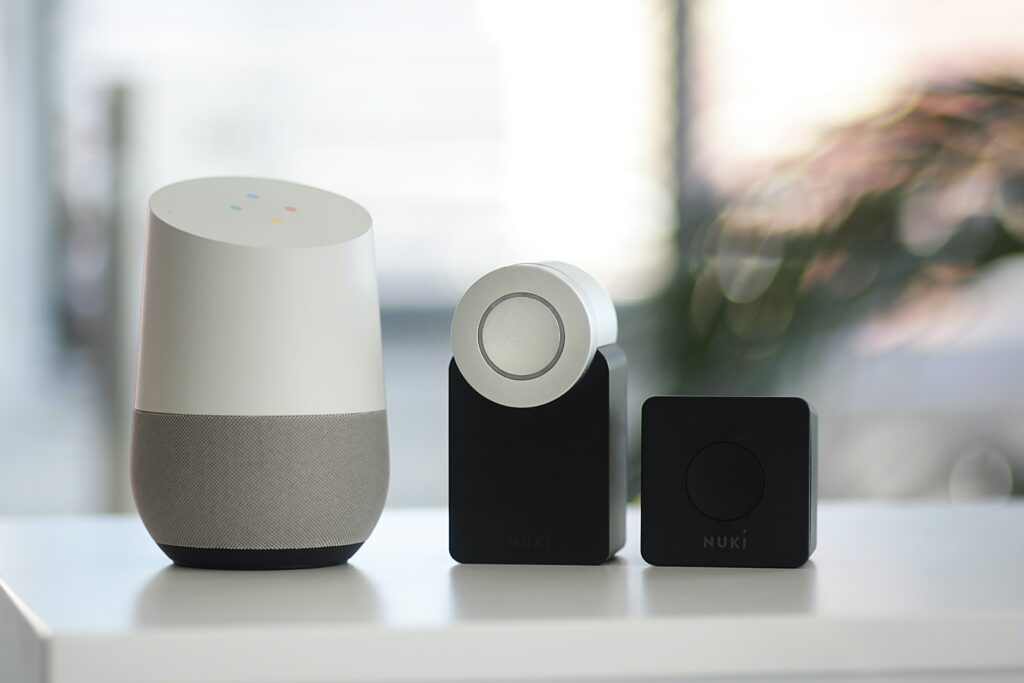
Unlike traditional chatbots, AI virtual assistants can handle more complex questions, adapt to how users behave, and learn from past interactions. They use conversational AI to simulate human-like conversations, providing personalized answers that improve user experience. Well-known examples include Amazon Alexa, Google Assistant, and IBM Watson Assistant.
What technologies power AI virtual assistants?
Four technologies do the work. Each one handles a different part of turning a sentence into a completed task.
Natural language processing (NLP)
NLP is a key technology that helps AI virtual assistants understand, interpret, and respond to human language. By examining the structure, meaning, and context of words, NLP allows these assistants to process voice or text commands accurately. This ensures smooth communication between users and the assistant.
Machine learning (ML)
Machine learning allows AI virtual assistants to get better over time by learning from user interactions. ML algorithms help these assistants recognize patterns, predict user needs, and adjust their responses based on what they’ve learned. This makes them especially useful for businesses that want to offer personalized customer experiences.
Artificial intelligence (AI)
AI is the foundation of virtual assistants. It combines technologies like cognitive computing, knowledge representation, and decision-making algorithms. AI enables these assistants to mimic human intelligence, perform tasks on their own, and handle activities like scheduling, analyzing data, and assisting customers.
Speech recognition and voice synthesis
AI virtual assistants with voice features use speech recognition to turn spoken language into text. They also use voice synthesis to reply verbally, making conversations feel more natural. This is particularly important for voice-based assistants like Siri and Alexa, and for call center software
that routes and transcribes calls automatically.
What can an AI virtual assistant actually do?
AI virtual assistants handle a wide range of tasks with accuracy and speed. Their primary functionalities include:
Natural Language Understanding (NLU): AI virtual assistants can understand and process user queries written or spoken in natural language. This allows smooth communication between people and machines. Using NLU, these assistants grasp the context, intent, and subtle meanings in conversations, which helps them provide correct and relevant responses.
Task Automation: AI virtual assistants take over repetitive tasks, such as scheduling meetings, setting reminders, managing emails, and entering data. By automating these activities, they save time and decrease the chances of human error.
Information Retrieval: These systems can quickly locate specific information from massive data sources. For example, they can retrieve customer data from a CRM system or answer factual questions, making it easier to access the information you need.
Personalization: AI assistants use machine learning to learn your preferences. Over time, they offer tailored recommendations for products, services, or workflow adjustments, making their suggestions more relevant.
Multimodal Capabilities: Many AI virtual assistants now support multiple forms of interaction, like text, voice, and visuals. This combination makes interactions more engaging and accessible to users.
Integration with Third-Party Tools: These assistants connect smoothly with other software applications, such as CRM platforms, project management tools, or communication apps. This integration allows for a unified and efficient way to manage your work.
AI assistant vs chatbot vs live agent: what’s the difference?
These three get used interchangeably and they are not the same thing. The short version:
Rule-based chatbot
AI virtual assistant
Live agent
Handles
Scripted FAQs, menu trees
Multi-step, context-aware requests
Judgment calls, sensitive issues
Learns from past chats
No
Yes
Not applicable
Understands phrasing it hasn’t seen
No
Yes
Yes
Available 24/7
Yes
Yes
Only with shift cover
Main cost driver
Flat licence fee
Per resolution, rises with complexity
Salary and overhead
Best for
Deflecting repeat questions
Resolving common issues end to end
Complex, high-value conversations
The practical rule: a chatbot answers, an AI virtual assistant resolves, and a human handles what neither should. Most support teams run all three, with the assistant sitting between the deflection layer and the queue.
The latest tips and deals delivered straight to your inbox.
What are the types of AI digital assistants?
AI assistants come in various types, each designed to serve different needs across industries. Here’s a look at the most common types and how they benefit businesses.
AI voice assistants
AI voice assistants are digital tools that interact with users through voice commands in natural language. They work using advanced artificial intelligence technologies such as Natural Language Processing (NLP), Automatic Speech Recognition (ASR), and Text-to-Speech (TTS). These technologies allow the assistants to perform a variety of tasks efficiently.
Key features and capabilities:
Task Automation: They can handle tasks like scheduling meetings, setting reminders, and controlling smart devices. This saves time and helps users stay organized.
Personalization: These assistants analyze user behavior to offer personalized suggestions, like recommending products or greeting users in a tailored way.
Multimodal Interactions: Some advanced models combine text, voice, and visual elements to create a more interactive experience.
Real-Time Responses: AI voice assistants respond quickly, providing accurate information and answers without delay.
Examples of popular AI voice assistants:
Amazon Alexa: Works well with smart home devices, allowing users to control things like lighting and home security through voice commands.
Google Assistant: Known for its strong search capabilities. It helps users find information, manage tasks, and stay organized while on the go.
Apple Siri: Built into Apple devices, Siri assists with dictation, navigation, and answering questions.
Microsoft Cortana: Mainly used in workplace settings to improve productivity by managing tasks and providing reminders.
AI chatbots
AI chatbots are AI-powered personal assistants that interact with users through text-based communication. By leveraging AI technology, including natural language processing (NLP) and machine learning, these chatbots understand user inputs and provide relevant responses. They integrate seamlessly with cloud services, ensuring scalability and security.
Key features and capabilities:
Customer Support: Many businesses use AI chatbots to provide 24/7 customer assistance, answering common inquiries and troubleshooting problems.
Lead Generation: Chatbots can collect user information, qualify leads, and guide potential customers through sales funnels.
Integration with Messaging Apps: Many chatbots operate within popular platforms like WhatsApp, Facebook Messenger, and Slack, making them easily accessible.
Multilingual Support: Advanced chatbots can understand and respond in multiple languages, enhancing global customer engagement.
Examples of AI chatbots:
ChatGPT: A versatile chatbot that can generate text, answer questions, and assist with various creative and professional tasks.
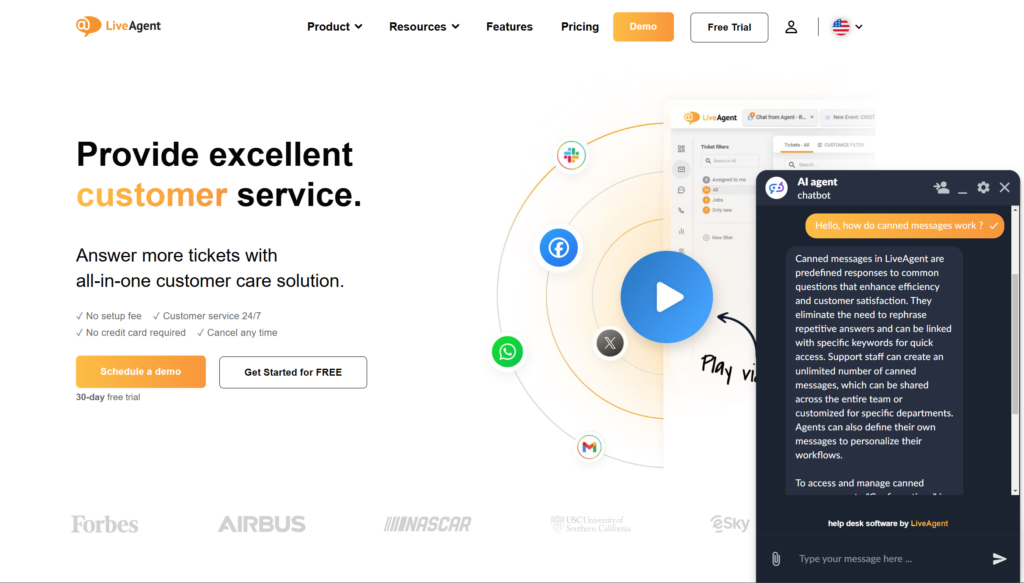
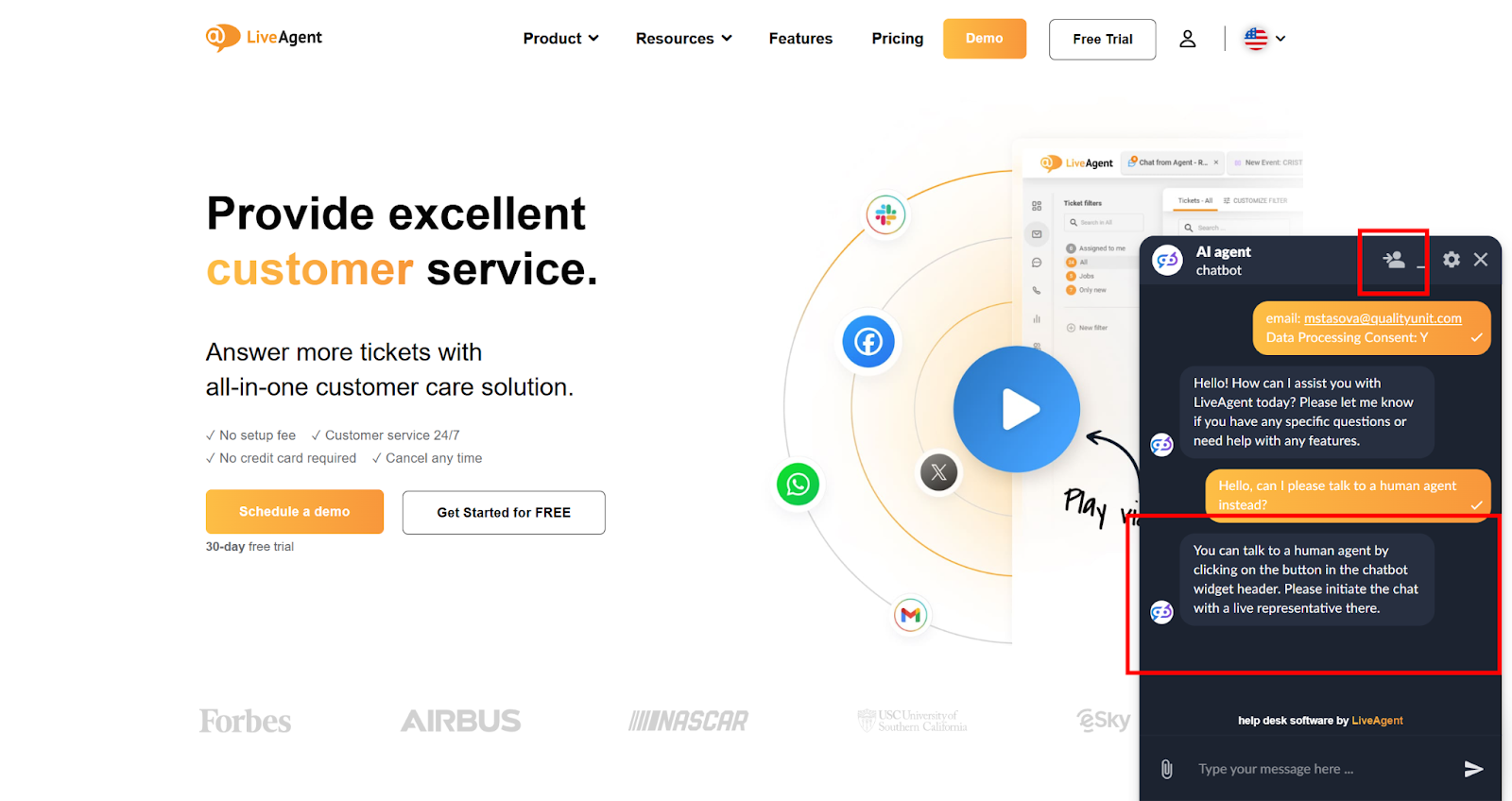
LiveAgent AI Chatbot: A customer service chatbot that helps businesses manage support requests efficiently and collects leads. It runs inside the same live chat software
your human agents use, so an unresolved conversation stays in one thread when it transfers.
Facebook Messenger Bots: Used by businesses to automate customer interactions and provide instant responses.
AI digital assistants
AI virtual assistants are more advanced than chatbots and voice assistants, as they can manage complex workflows and provide contextual support across different tasks and applications.
Key features and capabilities:
Task Management: AI virtual assistants can schedule meetings, manage emails, and organize workflows.
Context Awareness: They analyze user preferences, past interactions, and work habits to provide tailored recommendations.
Multi-Platform Support: They function across multiple devices, ensuring seamless assistance regardless of the user’s location.
Enterprise Integration: Many virtual assistants integrate with workplace software such as Microsoft Office, Google Workspace, and CRM platforms.
Examples of AI virtual assistants:
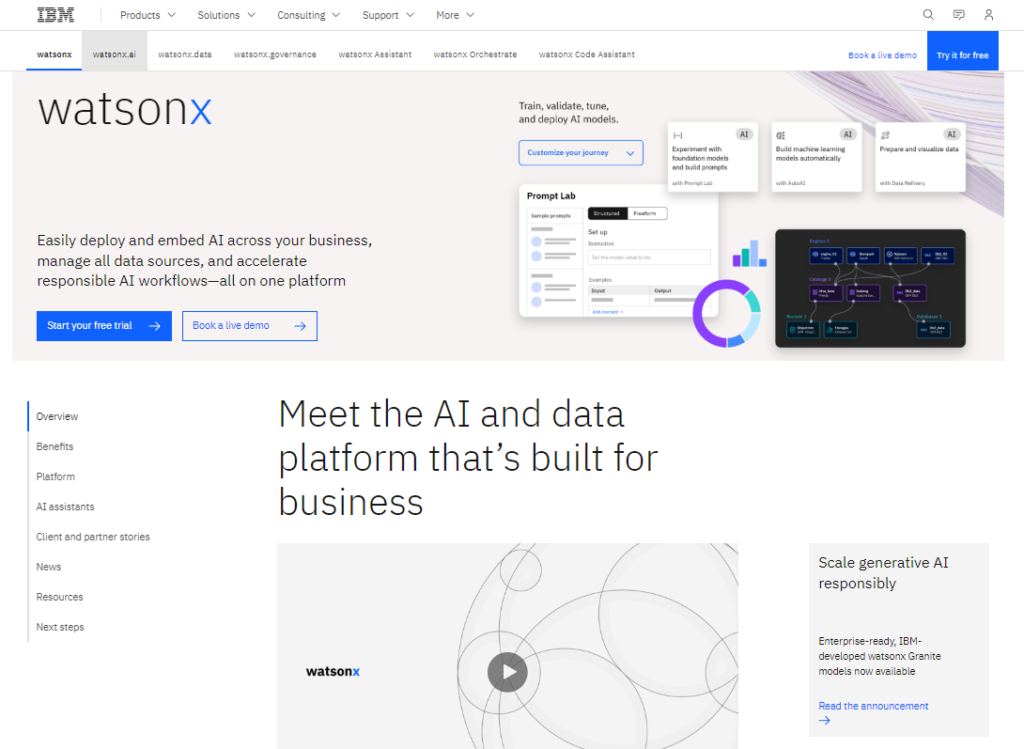
IBM Watson Assistant: Used by businesses to enhance customer service and automate tasks.
Google Gemini: Google’s assistant, renamed from Bard in 2024. Provides research assistance and helps users generate content and summaries.
Samsung Bixby: Integrated with Samsung devices to provide personalized assistance.
What does an AI virtual assistant cost?
Pricing usually looks like one of three models: a flat monthly licence, a per-agent seat fee, or a usage charge tied to resolutions or tokens consumed. The third is where budgets get unpredictable, because cost scales with how hard each request is rather than how many you receive.
That distinction is becoming the main planning problem. Gartner’s January 2026 forecast puts generative AI cost per resolution above $3 by 2030, ahead of many B2C offshore human agents, driven by rising data centre costs, vendors moving from subsidised growth to profitability, and use cases that consume more tokens as they get more complex (Gartner, January 2026
).
The takeaway is not that automation stops paying off. It is that the cheap wins and the expensive ones now sit in the same tool. Deflecting a password reset costs almost nothing. Reasoning through a billing dispute across three systems does not. Teams that measure cost per resolution by request type, rather than as one blended number, get a far clearer picture of what to automate next.
How do businesses use AI assistants?
AI-powered virtual assistants automate repetitive tasks, improve user experiences, and streamline operations. Scheduling assistants handle appointments, while customer support assistants offer personalized experiences through voice commands and contextual understanding.
A prime example is the LiveAgent AI Chatbot, which integrates over 15 advanced AI models, including ChatGPT, for natural language understanding and predictive analytics. It quickly resolves common queries and escalates complex issues to human agents through the same help desk software
that holds the ticket history, so the agent picking it up sees the full conversation rather than a summary.
Which industries benefit most from AI virtual assistants?
The pattern is consistent: the biggest gains come where question volume is high and the questions repeat. We cover seven industry use cases
in more depth separately.
Retail and e-commerce applications
In retail, AI virtual assistants enhance shopping experiences, manage inventory, and provide 24/7 customer support. Recommendation engines powered by AI analyze customer behavior, suggesting products that match preferences, which drives sales and repeat purchases.
AI predicts demand using sales data and trends, helping maintain ideal stock levels. Google Cloud and Amazon Web Services offer analytics services that aid inventory management, like estimating demand for perishable items to reduce waste.
Travel and hospitality
AI virtual assistants simplify travel planning by offering tailored recommendations for trips and accommodations. They take care of bookings, cancellations, and customer inquiries, ensuring a smooth travel experience for users.
With predictive analytics, AI helps travel companies forecast demand, set competitive prices, and manage inventory. This allows businesses in the hospitality industry to stay competitive while offering excellent service.
Manufacturing and supply chain management
In manufacturing, AI virtual assistants improve production efficiency and monitor supply chain operations. They analyze data to predict when equipment might fail, enabling businesses to perform maintenance before issues arise, which minimizes downtime.
For supply chain management, AI predicts demand, tracks shipments, and improves logistics. This ensures timely deliveries and keeps costs under control.
Education and learning
AI virtual assistants provide customized learning experiences by adapting educational materials to meet the individual needs of students. They also help teachers with administrative tasks, such as grading and tracking attendance, giving educators more time for interactive teaching.
With features like real-time language translation and voice recognition, AI assistants support multilingual learning environments, making education more accessible to diverse groups of students.
How do AI virtual assistants work in customer support?
AI-powered assistants respond to customer queries, solve problems, and improve user experiences by applying machine learning and natural language processing to each conversation. By examining customer interactions and preferences, these assistants provide customized solutions designed to meet individual requirements.
24/7 availability
AI-powered assistants are available around the clock, ensuring customers get help whenever they need it. This is especially useful for businesses serving customers across different time zones. Late-night shoppers can get immediate answers instead of waiting for business hours.
Scalability and efficiency
Unlike human agents who can only handle a limited number of interactions at once, AI digital assistants can manage thousands of customer queries simultaneously. This scalability ensures that businesses can handle high demand without lowering service quality. Routine tasks, such as answering common questions or managing scheduling, are automated, allowing human agents to focus on more complex and strategic work.
Data-driven insights
AI assistants collect and analyze large amounts of customer data, including past interactions, preferences, and recurring problems. By processing this information, businesses can refine their customer service strategies, anticipate customer needs, and improve the products or services they offer.
Personalization at scale
AI digital assistants deliver tailored recommendations and solutions based on customer preferences over time. E-commerce platforms often use AI to suggest products based on previous purchases or browsing history, which improves both conversion and repeat purchase rates.
LiveAgent AI chatbot: a comprehensive solution
The LiveAgent AI Chatbot is integrated into LiveAgent’s chat platform and works with FlowHunt, an AI chatbot provider. It handles routine inquiries using knowledge bases, escalates more complex questions to human agents, and assists with generating leads.
Key features of the LiveAgent AI Chatbot include:
Multimodal Support: The chatbot supports over 100 languages, making it suitable for businesses with global customers.
Flexibility: Companies can design multiple chatbots for different functions, such as customer support, sales, or internal operations.
Advanced AI Models: The default model is ChatGPT, but FlowHunt supports over 15 advanced AI models and allows businesses to integrate their own large language models (LLMs).
Where to start
If you are evaluating an AI virtual assistant, the useful first step is not picking a vendor. It is listing your top 20 request types by volume and marking which ones follow a predictable path. Those are the ones that pay for themselves at today’s prices. The rest are worth automating only once you can measure what each resolution actually costs.
Try the LiveAgent AI Chatbot with a free 30-day trial to see how it handles your own request mix.
Share this article
Lilia is a content manager at LiveAgent. Passionate about customer support, she crafts engaging content that highlights the power of seamless communication and exceptional AI-powered service.
Lilia Savko
Copywriter
Frequently asked questions
A traditional chatbot follows a script and fails on any phrasing it was not given. An AI virtual assistant interprets intent, so it handles questions it has not seen before, adapts to user behavior, and learns from past interactions. It also carries context across a conversation, which lets it resolve multi-step requests rather than just answering one question at a time.
Four technologies do the work. Natural Language Processing (NLP) interprets what the user means, Machine Learning (ML) improves responses using past interactions, and artificial intelligence handles decision-making and task planning. Speech recognition and voice synthesis add spoken input and output for voice assistants. Most business assistants combine all four rather than relying on any single one.
It depends on how much work each request takes. Gartner forecasts that generative AI cost per resolution will pass $3 by 2030, above what many B2C offshore human agents cost, because complex requests consume more tokens. Simple, high-volume deflection stays cheap; multi-step reasoning does not.
The most common uses are customer support, lead generation, appointment scheduling, data analysis, personalized recommendations, and workflow automation. In support specifically, the assistant resolves repeat questions end to end and escalates anything needing judgment to a human agent. That combination cuts response times without removing a person from the conversations that need one.
Retail and e-commerce, travel and hospitality, manufacturing and supply chain, education, and customer support teams see the clearest gains. The common thread is not the industry itself but the request mix: high volumes of repeat questions that follow predictable paths. Where every request is unique, an AI virtual assistant returns far less value.
In practice they complement human agents rather than replace them. The assistant absorbs routine, high-volume queries, while complex, sensitive, or high-value conversations go to a person. Most teams run a hybrid model where the assistant handles first contact and passes the full conversation history to an agent when escalation is needed.
An AI virtual assistant responds to a request and completes the task it was asked to do. An AI agent goes further, deciding on its own which steps to take to reach a goal and acting across systems without being prompted at each step. In customer service the two terms increasingly overlap.
7 Ways Businesses Use AI Virtual Assistants for Customer Service (Real Examples)
E-commerce, SaaS, healthcare, finance — AI virtual assistants solve different problems in different industries. Here are seven use cases with measurable outcome...
AI customer support assistant: the complete guide to modern customer service automation in 2026
AI customer support assistants use NLP and machine learning to resolve issues end-to-end, integrate with CRM systems, and operate 24/7. Learn what features matt...
AI virtual assistant vs chatbot vs live agent: Which does your team actually need?
Chatbots, AI virtual assistants, and live agents are not interchangeable. Here is a clear breakdown of all three — with a decision framework your team can apply...
11 min read
AI
Chatbot
+3
Cookie Consent We use cookies to enhance your browsing experience and analyze our traffic. See our privacy policy.