What is multimodal customer support and why customers are craving it so much?
Customers already mix text, photos, voice and video when they talk to each other. Learn why multimodal customer support is becoming the expectation, and how to build toward it without a full overhaul.
Blog
Customer Support
Customer Experience
Omnichannel
Live Chat
There’s a specific kind of frustration that doesn’t have a name yet, but every support team runs into it daily. A customer is on hold, trying to describe a weird noise their washing machine makes. They think: I could just record this in ten seconds. But they can’t, because the support form only takes text, so instead they’re typing “it sounds like a metallic clicking, kind of rhythmic” and hoping the agent has a good imagination.
You’ve felt this from the other side. A customer emails a screenshot, then calls an hour later, and now you’re scrambling to find that email while they’re on hold, getting more annoyed by the second. It’s not that you don’t care. It’s that the tools weren’t built to keep the story in one place, so the customer ends up re-explaining a problem they already explained five minutes ago, and you end up apologizing for asking them to.
Modern CX industry leaders call this a demand for “multimodal support.” Neither you nor the customer thinks in industry terms. You just think: why is this the hard way to solve a simple problem?
What is multimodal customer support?
Multimodal support means a customer can mix text, images, voice and video in one continuous conversation, without starting over or repeating themselves. That’s a genuinely different thing from just offering several channels. Omnichannel gives customers a choice of channel and consistent service on whichever one they pick. Multimodal lets them move between formats mid-conversation, because that’s just how people talk to each other already. You send a link mid-call. You screen-share instead of typing three sentences about a bug. Support should work the same way, and customers increasingly assume it will.
It matters more than it sounds like it should. When someone has to abandon a chat to make a phone call, or email a screenshot separately from the ticket they already opened, they lose all the context they’d just built. They have to explain themselves again. That’s not a small annoyance, it’s a signal, whether you mean it or not, that the brand didn’t hold onto what the customer just told them.
The old model asked customers to pick a lane
Omnichannel support was a genuine step forward. It meant a customer could reach you by chat, email or phone and trust they’d get treated the same way regardless of which one they used. For a while, that felt like enough.
But omnichannel still asks something of the customer: choose your channel, then live with that choice for the rest of the conversation. Start in chat, and you’re in chat. If the issue turns out to need a screenshot, tough luck, now you’re describing pixels in words.
Multimodal support removes that constraint. A customer can start in text, drop in a photo, jump to a voice note, and none of it requires starting over. For a small team, this isn’t about chasing a trend. It’s about not losing an hour a day to customers repeating themselves and agents piecing together the same story from three different places.
People are already telling you what they want
You don’t have to guess at this one. Three in four consumers say they’d pick a company over a competitor purely for letting them mix text, images and video in the same thread. Not a nice bonus. A purchase decision.
The appetite for video specifically is higher than most support teams assume. Around 70% of people are willing to record a return so it can be verified on the spot, instead of writing three paragraphs about the item’s condition. A similar share will happily film a technical glitch or a half-assembled product rather than describe it. If you’ve ever tried to troubleshoot furniture assembly over text, you know why. Some problems were never meant to be explained in sentences, and every extra back-and-forth is a ticket sitting in your queue longer than it needs to.
Voice hasn’t lost its place either, and it’s worth resisting the instinct to treat it as the channel on its way out. When something’s complicated or emotionally charged, people still reach for a real conversation over a chat box. Tone carries information text can’t, and for a small team, a five-minute call often resolves what would’ve taken six messages of clarification.
The part that actually costs you time
Here’s the thing nobody puts on a slide: multimodal isn’t really about the format at all. It’s about whether the context survives the switch. A customer who sends a screenshot in chat, then calls later, doesn’t want to re-explain themselves to whoever answers. And if you’re a small team without a dedicated system for this, that context loss becomes your problem too, you’re the one apologizing for asking them to repeat something they already told you.
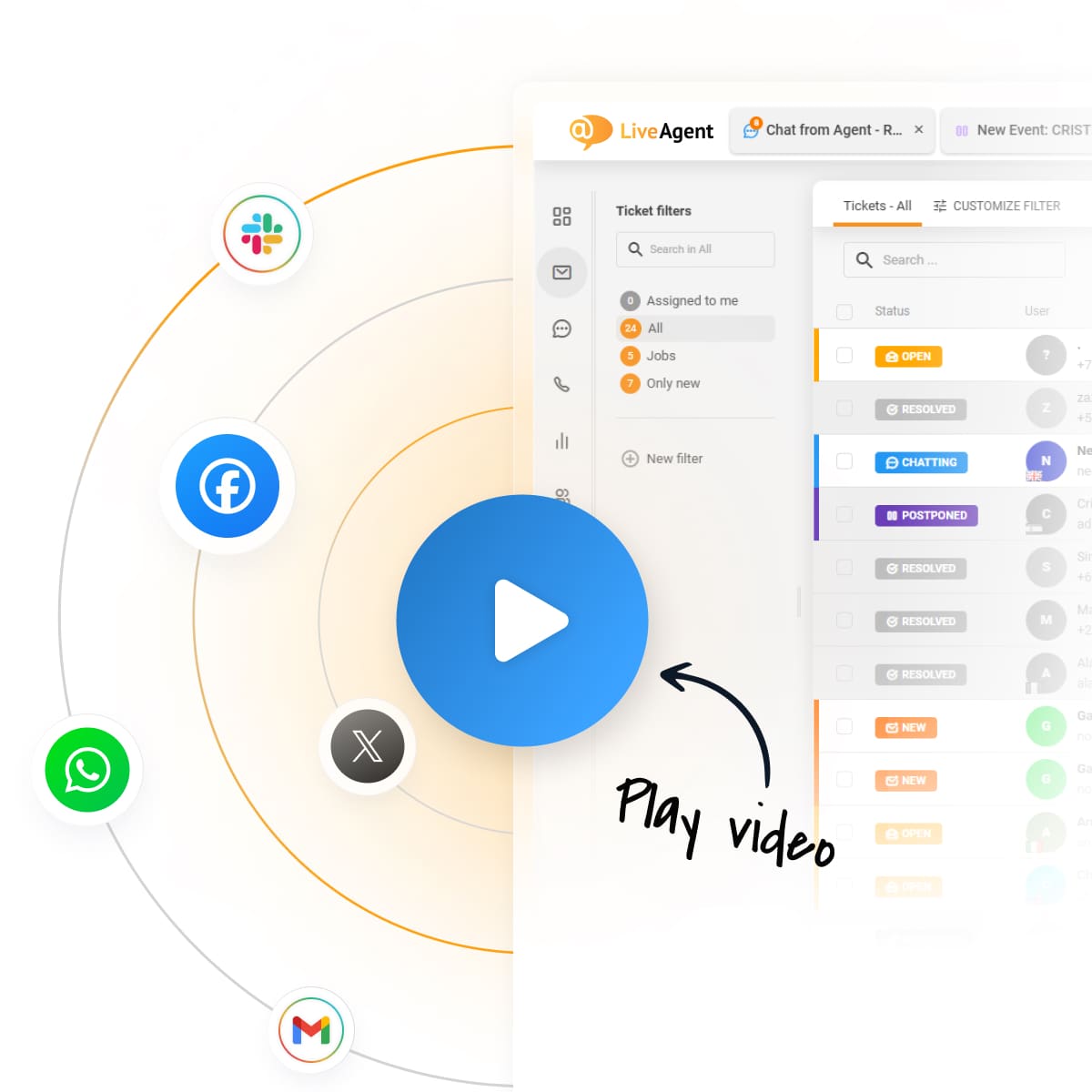
This is where the plumbing matters more than any flashy AI headline. LiveAgent’s universal inbox
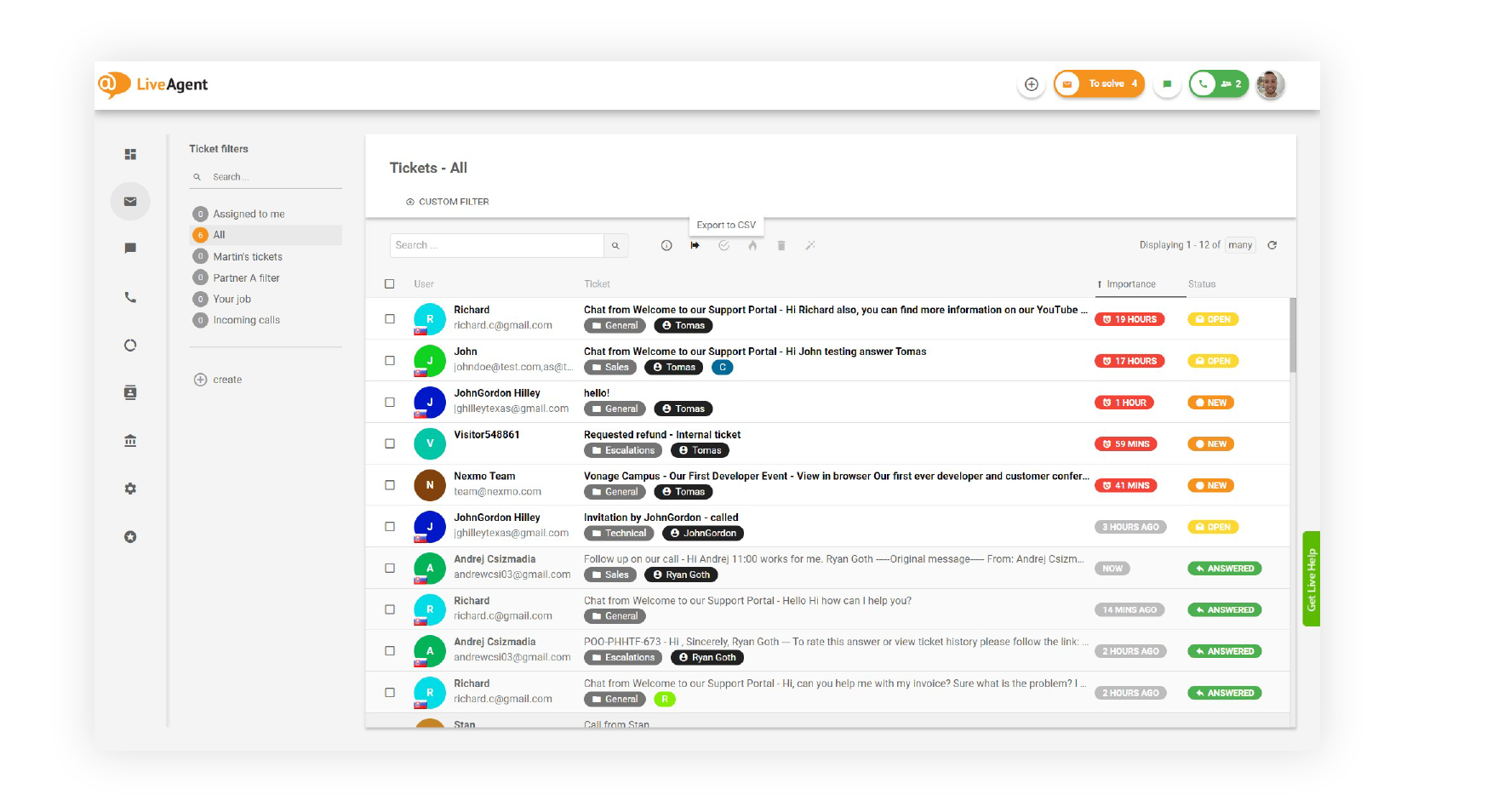
exists for exactly this reason. Chat, email, calls and social messages all land in one ticket thread, so nothing gets stranded in a separate inbox when the customer switches formats. And when someone does call, LiveAgent’s call center
logs it in the same view as everything else, so you’re not starting a conversation from zero that’s actually three messages deep already.
None of that is glamorous. It’s not the story about an AI agent that watches your customer’s video. But for a lean team, it’s the difference between multimodal support feeling seamless and feeling like three separate support experiences you’re stitching together by hand.
Join our newsletter
The latest tips and deals delivered straight to your inbox.
The other half: getting the file there in the first place
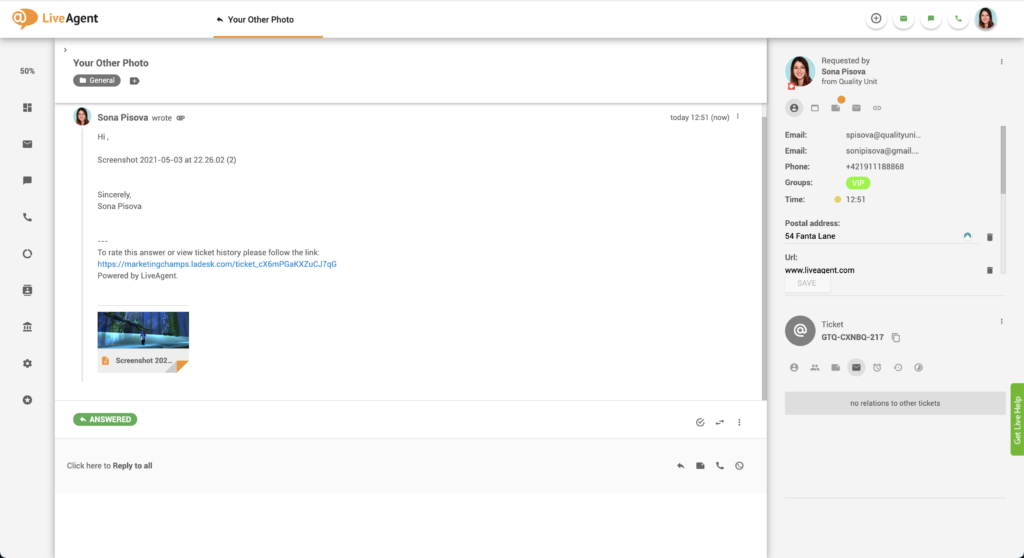
Keeping the conversation in one place solves half the problem. The other half is making sure customers can actually attach whatever they need to, without a fight. LiveAgent’s attachments
feature supports drag-and-drop across tickets, live chat, contact forms and even knowledge base articles, and it doesn’t restrict file types by default. A customer isn’t stuck figuring out how to compress a video or convert a file format before they can send it.
That matters more than it sounds. A washing machine’s clicking noise, a broken part, a confusing error screen, whatever the problem looks like, it gets attached exactly where the conversation is already happening, instead of turning into a separate email thread you have to go track down later. Small detail, but it’s usually the small details that turn a five-minute ticket into a fifteen-minute one.
Where the gap is widening
Companies that have leaned into this are pulling ahead in a way that’s hard to ignore: 93% of high-maturity organisations say their AI agents already handle at least one non-text format, compared to just over half of low-maturity ones. You don’t need enterprise scale to close that gap. You need the conversation to stay in one place, which is a tooling decision, not a headcount decision.
Start small, start smart
You don’t need a video support strategy by Friday. Start with what customers already reach for without thinking, text, images, voice, and make sure none of it gets lost when the format changes. Once that foundation actually holds, whether you’re a five-person team or fifty, video and screen-share stop being a leap and start being the obvious next step.
The real point
Nobody wakes up wanting to use three different channels to solve one problem, and no support agent wants to spend their morning reconstructing a conversation that already happened somewhere else. People want the problem solved, in whatever format is fastest at that exact moment, without explaining themselves twice. The teams getting this right in 2026 aren’t the ones with the most channels or the biggest headcount. They’re the ones where the channels stopped mattering, because the conversation just kept going, no matter how the customer chose to have it.
Share this article
Lilia is a content manager at LiveAgent. Passionate about customer support, she crafts engaging content that highlights the power of seamless communication and exceptional AI-powered service.
Learn to provide jaw-dropping omnichannel support with 7 strategies: develop a strategy, enhance social media response times, promote self-service, use live cha...