
Learn more about Departments in LiveAgent.
An agent group, also called a department, is a group of agents that share analogous skills and abilities. Groups are usually based on something, e.g. location of clients or type of issue. It helps agents to concentrate on a specific field, stay focused and effective.
All incoming messages and calls entering through different channels are in a moment redirected to various agent groups without manual processing. This automatic routing ensures that customer inquiries reach the most appropriate team members, improving response times and customer satisfaction.
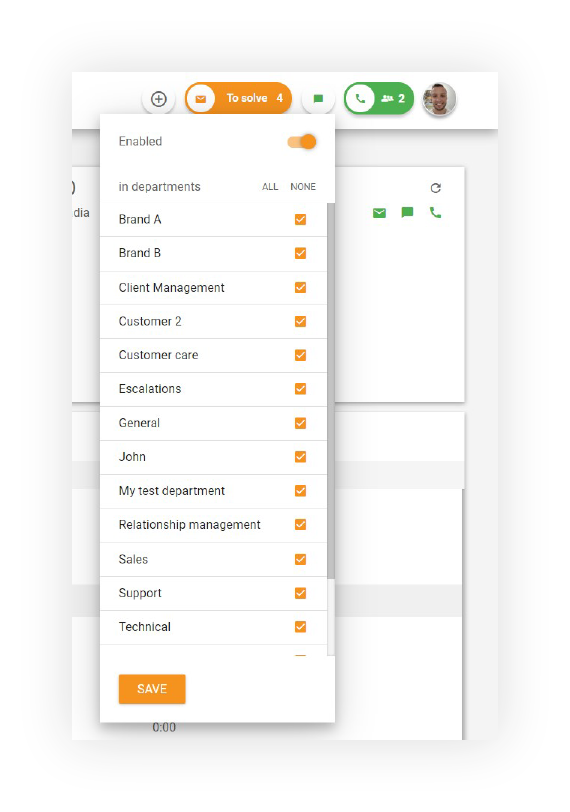
Key Benefits of Agent Groups
Improved Organization
Agent groups provide a structured way to organize your support team. By grouping agents with similar skills and responsibilities, you create a clear organizational hierarchy that makes management easier and more efficient.
Focused Expertise
When agents are grouped by their areas of expertise, they can focus on specific types of issues or customer segments. This specialization leads to:
- Faster resolution times - Agents handle issues within their area of expertise
- Higher quality support - Specialized knowledge improves solution quality
- Better customer experience - Customers get help from the most qualified agent
- Increased agent satisfaction - Agents work on tasks they’re skilled at
Automatic Routing
One of the most powerful features of agent groups is automatic message and call routing. Instead of manual assignment:
- Incoming tickets are automatically directed to the appropriate group
- Calls are routed based on department or skill
- Live chat conversations go to the right team
- Emails are distributed efficiently
This automation reduces manual work and ensures faster response times.
Scalability
As your business grows, agent groups make it easier to scale your support operations:
- Add new agents to existing groups
- Create new groups for new service areas
- Manage multiple teams across different locations
- Maintain consistency in service quality
How Agent Groups Work
Agent groups function as the backbone of efficient ticket routing and customer service delivery:
- Group Creation - Administrators create groups based on business needs (e.g., Sales, Support, Billing)
- Agent Assignment - Agents are assigned to appropriate groups based on their skills
- Routing Rules - Tickets and calls are automatically routed to the correct group
- Load Balancing - Work is distributed among available agents in the group
- Monitoring - Managers can track group performance and individual agent metrics
Types of Agent Groups
By Department
Organize groups based on business functions:
- Sales - Handles pre-sales inquiries and quotes
- Support - Manages technical support and troubleshooting
- Billing - Handles payment and account issues
- Onboarding - Assists new customers with setup
By Skill Level
Group agents by their expertise:
- Tier 1 - Basic support and common issues
- Tier 2 - Advanced technical support
- Tier 3 - Expert-level troubleshooting
- Specialists - Highly specialized support areas
By Location
Organize by geographic regions:
- North America - US and Canada support
- Europe - European customer support
- Asia Pacific - APAC region support
- Local Teams - Regional or city-based groups
By Customer Type
Group based on customer segments:
- Enterprise - Large account support
- SMB - Small and medium business support
- Startup - New customer support
- VIP - Premium customer support
Best Practices for Agent Groups
Clear Naming Conventions
Use descriptive names that clearly indicate the group’s purpose:
- ✅ Good: ‘Technical Support - Enterprise, “Billing Department”
- ❌ Avoid: “Group 1”, “Team A”
Balanced Workload
Ensure groups have:
- Appropriate number of agents for expected volume
- Similar skill levels within the group
- Clear escalation paths to higher-tier groups
Regular Review
Periodically review your group structure:
- Monitor group performance metrics
- Identify bottlenecks or inefficiencies
- Adjust group composition as needed
- Update routing rules based on trends
Clear Responsibilities
Define what each group handles:
- Document the types of issues each group manages
- Create clear escalation procedures
- Establish service level agreements (SLAs)
- Communicate expectations to all team members
Training and Development
Invest in your agent groups:
- Provide ongoing training for group members
- Share best practices within groups
- Encourage knowledge sharing
- Support career development and advancement
Monitoring Agent Group Performance
Key Metrics to Track
- Average Response Time - How quickly groups respond to inquiries
- Resolution Time - Average time to resolve issues
- First Contact Resolution - Percentage of issues resolved on first contact
- Customer Satisfaction - Ratings and feedback from customers
- Ticket Volume - Number of tickets handled by each group
- Agent Utilization - How efficiently agents are working
Conclusion
Agent groups are essential for organizing an efficient customer support operation. By grouping agents with similar skills and responsibilities, you create a structure that enables automatic routing, improves response times, and enhances overall customer satisfaction. Whether you’re managing a small support team or a large enterprise operation, implementing well-designed agent groups is crucial for success.
Start improving your customer support today by creating agent groups in LiveAgent. With proper organization and automatic routing, your team can work more efficiently and provide better service to your customers.