What is memory-rich AI, and why customer service teams can't ignore it anymore
Customers are done repeating themselves. Learn what memory-rich AI is, why 74% of consumers find repetition frustrating, and how support teams can build personalization that actually feels personal.
AI
Customer Support
Personalization
Automation
Customer Experience
Think about the last time you had to explain the same problem twice. Maybe you chatted with support, got cut off, then had to call and start over. Or you emailed a company, waited three days for a reply, and the agent asked you questions you’d already answered in your first message.
It’s a small thing, but it adds up. And it’s exactly the kind of friction that memory-rich AI is designed to remove.
Customers today don’t want to be treated like strangers every time they reach out. They want a brand to pick up where the last conversation left off, even if that conversation happened on a different channel, with a different agent, weeks ago. That’s not a big ask anymore. It’s becoming the baseline.
What is memory-rich AI
Memory-rich AI is exactly what it sounds like: AI that remembers. Not just the last message in a thread, but the full history a customer has with a brand, across every channel they’ve used.
That includes past purchases, previous issues, preferences they’ve mentioned, and even the tone of earlier conversations. Instead of treating each interaction as a blank slate, the AI carries all of that context forward and puts it to use the next time that customer gets in touch.
This is a real step up from basic automation, which usually handles one request and then forgets everything the moment the conversation ends. Memory-rich AI builds an ongoing picture of each customer instead, so support starts to feel less like a series of one-off transactions and more like a relationship the brand actually remembers.
In practice, this might mean an AI agent knows a customer already sorted out a shipping issue last month, or that they’d rather get updates by email than chat, or that they flagged a product concern a few days earlier. Small details, but they change how the next conversation goes.
Why customers are asking for this
Personalization used to be a nice touch. Now it’s expected, and AI is a big reason why.
Once people experience fast, tailored service in one part of their life, they carry that expectation everywhere else. So when a brand falls short, especially by making someone repeat information they’ve already given, it doesn’t read as a minor inconvenience. It reads as the brand not paying attention.
A 2026 industry survey of more than 11,000 consumers and customer service leaders backs this up. Sixty-seven percent of consumers say brands should be offering more personalized service now that AI can analyze their interactions. And 74 percent say repeating themselves to a company is genuinely frustrating, often taking it as a sign the brand doesn’t value their time.
That’s a real shift in what personalization means. It used to be a first name dropped into an email subject line. Now it means a support conversation that actually reflects what a customer has already told the company, without them having to say it twice.
The business case for memory-rich AI
This isn’t just something customers want. It’s something that shows up in the numbers CX leaders actually track.
In the same survey, 85 percent of CX leaders said persistent memory helps brands build deeper, longer-lasting relationships with customers. Another 85 percent said memory-rich AI agents are key to delivering journeys that feel genuinely personalized, not just automated. And 83 percent said remembering context across channels sharply cuts down on customer effort and frustration.
Agents feel the difference too. When someone’s full history is visible in one place, agents stop wasting time hunting through five different tools just to piece together what already happened. Seventy-three percent say having that history in one view makes it easier to do their job well.
And efficiency and satisfaction go hand in hand here. An agent who has to ask a customer to repeat themselves, or dig through disconnected systems to find basic account details, is going to be slower and more likely to leave that customer feeling unheard. Memory-rich AI takes that friction off both sides of the table.
There’s a competitive edge to this too. Seventy-four percent of CX leaders believe their organization could struggle to stay competitive without moving quickly on AI adoption. And the ones who’ve already made the move are seeing it pay off: high-maturity organizations running memory-rich AI are twice as likely to report a boosted CSAT score, and 1.6 times more likely to have deployed it in the first place compared to the average company.
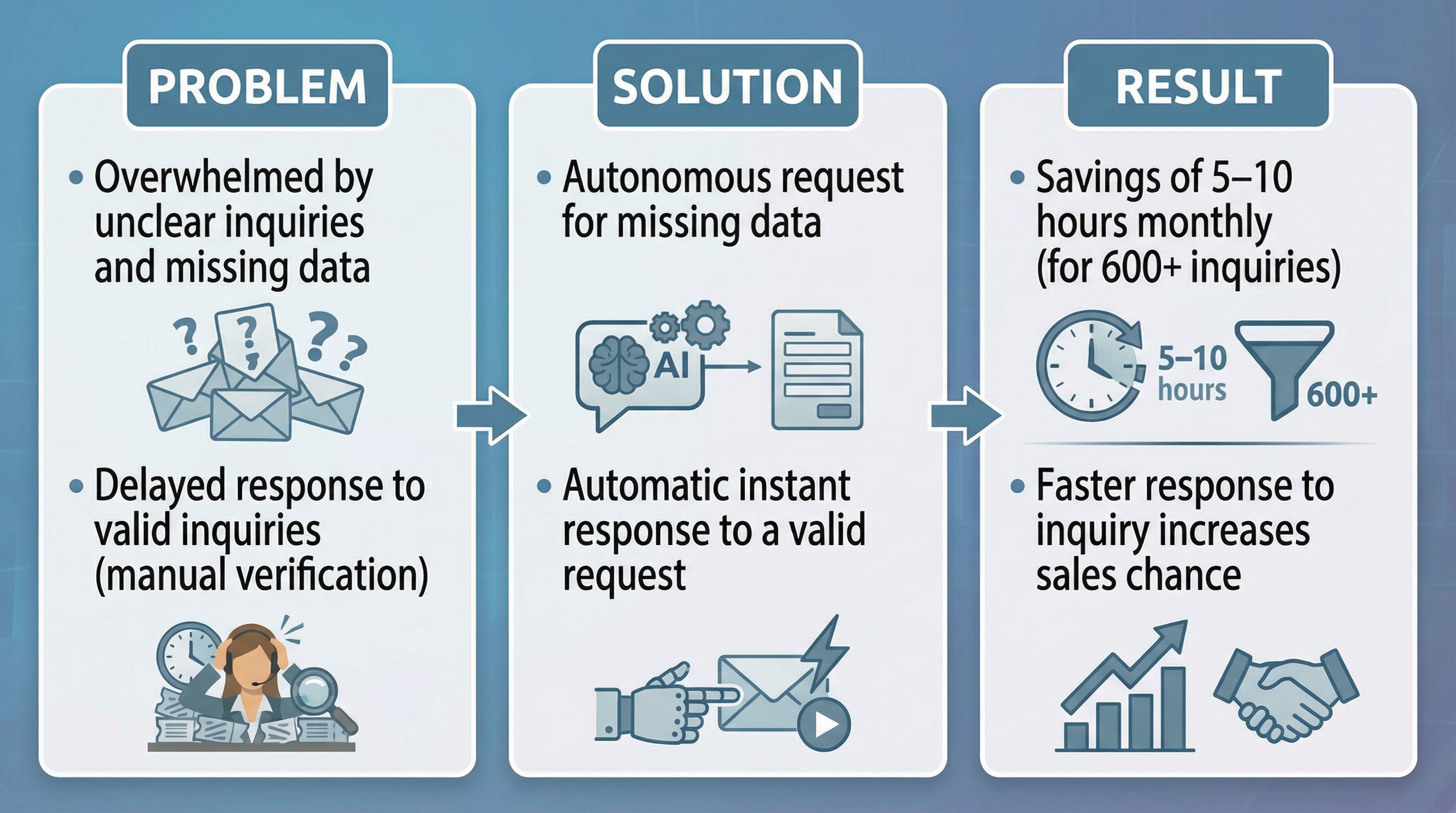
Features like LiveAgent’s AI ticket validation and autoresponse
are built around this exact gap. Instead of sending a generic reply, the system checks the ticket against relevant context before responding, so customers get an answer that actually reflects their situation, not a template that happens to sound close enough.
How memory-rich AI works in practice
Under the hood, memory-rich AI depends on connecting data that usually lives in separate places: your support platform, your CRM, order history, chat logs, maybe a handful of other tools nobody quite remembers signing up for. Instead of leaving all of that siloed, memory-rich AI pulls it together so it’s ready to use the moment a conversation starts.
But having the data isn’t enough on its own. The system also needs to know what’s actually relevant to the conversation happening right now, and use it without overwhelming the customer or dragging up something that no longer applies. That’s the part that separates a genuinely useful memory-rich AI setup from one that just feels like it’s guessing.
Done well, it can recognize that a customer already got a service credit for a delivery issue last month, and factor that into how a new, related request gets handled. It can also pick up on a conversation turning tense, drawing on the emotional context of earlier messages rather than just the facts on record.
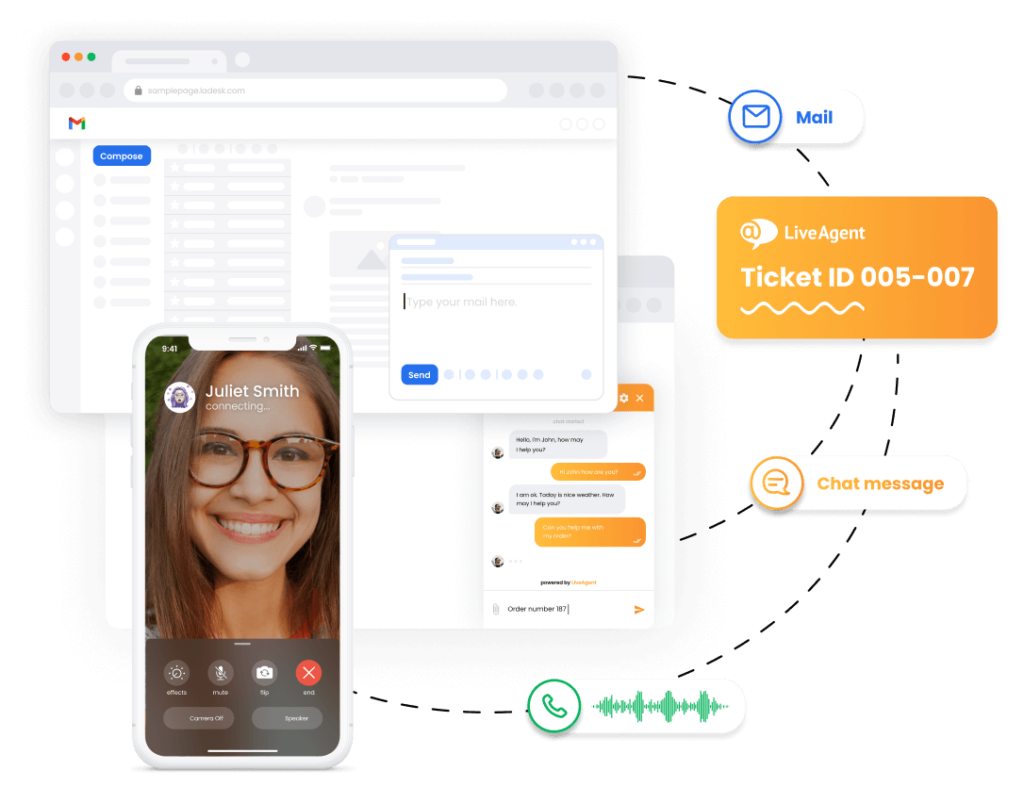
This is the idea behind LiveAgent’s universal inbox
. Every channel a customer uses, email, live chat, calls, social messages, contact forms, feeds into a single view, with their full interaction history attached to the ticket. Agents aren’t hunting across separate tools to reconstruct what happened. It’s already there.
Join our newsletter
The latest tips and deals delivered straight to your inbox.
Starting small: how to build toward memory-rich AI
You don’t need to overhaul everything at once, and honestly, trying to is usually where these projects stall out.
A good place to start is simply cutting repetition within a single conversation. Give your AI the ability to remember and reuse details a customer has already shared, so nobody’s asked the same question twice in one exchange.
From there, connect that memory across follow-up interactions. Think about what happens when a customer switches from chat to email, or comes back a week later with a related question. The goal is continuity: the history should travel with the customer, not stay trapped inside whatever channel they happened to use first.
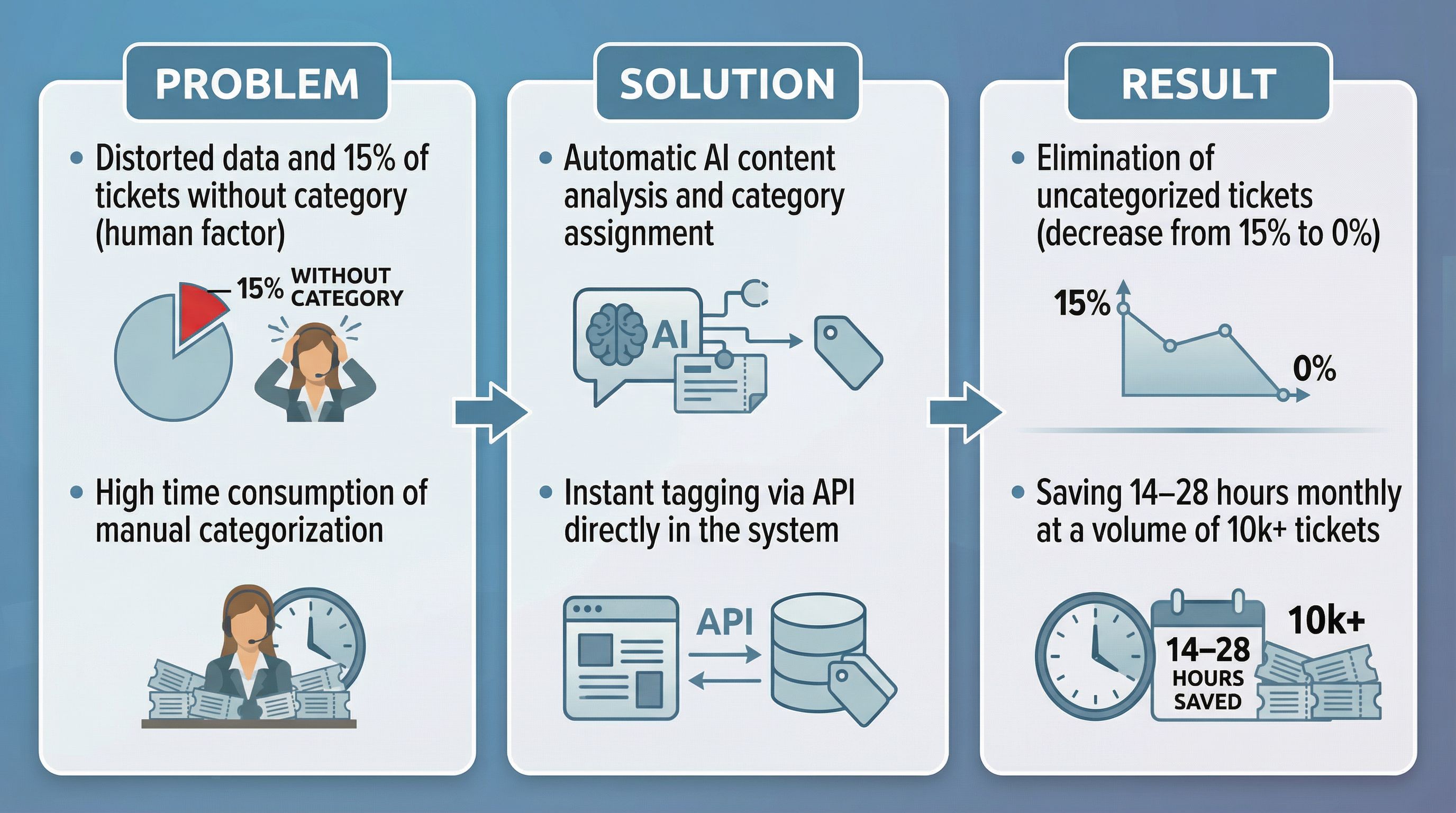
Tools like LiveAgent’s AI ticket triage and categorization
help here too. Incoming requests get routed and tagged based on context from the ticket and the customer’s profile, rather than treated as a fresh, unrelated case every time. That keeps related conversations connected instead of scattering them across different queues.
Over time, this builds toward something bigger: a connected knowledge base pulling from structured data, past conversations, and the policies guiding how support gets delivered. That foundation doesn’t just power personalization. It’s the same groundwork that makes faster resolutions and clearer, more transparent AI decisions possible too.
Common mistakes to avoid
Even good rollouts of memory-rich AI can go sideways. One mistake we see often is trying to connect every data source on day one. It stretches teams thin and delays any visible progress. It’s usually smarter to start with the systems customers interact with most, like support tickets and order history, and expand from there.
Another pitfall is leaning on stored context too rigidly. If an AI system assumes a past issue is still relevant when it isn’t, or clings to an outdated preference, it stops feeling helpful and starts feeling intrusive. Memory should inform a conversation, not run it. Customers need a way to correct or update what the system assumes about them.
And treating this as a one-time project rather than an ongoing capability tends to backfire. Customer needs change, channels evolve, and the data feeding your AI needs regular attention to stay accurate. Build in a habit of checking it periodically, or the personalization you worked hard to set up will quietly go stale.
How to measure whether it’s working
Rolling out memory-rich AI is only half the job. Knowing whether it’s actually improving things means watching the right signals, not just tracking how many teams have adopted it.
Start with repeat contact rate. How often is the same customer reaching out again about something that was supposedly resolved? A drop here is one of the clearest signs that context is genuinely carrying over, instead of customers having to start from scratch each time.
Average handle time is worth watching too, but only alongside resolution quality. A shorter handle time only counts as progress if the issue is still getting fixed properly. Pair it with first contact resolution rate so speed doesn’t come at the cost of actually solving the problem.
Customer effort score deserves close attention as well, since it captures how much work someone felt they had to put in just to get help. Reducing that effort is the whole point of memory-rich AI, so a real shift here is often the clearest sign the investment is paying off.
Finally, ask your agents. A quick survey or informal check-in can tell you whether they’re still bouncing between five tabs to find context, or whether that promised single view of the customer is actually showing up in their day-to-day work.
The takeaway
None of this is customers asking for something unreasonable. They just want to be recognized the next time they get in touch, without having to reintroduce themselves from scratch. Memory-rich AI is what makes that possible at scale, and it’s quickly moving from a nice differentiator to something customers simply expect.
That said, memory alone isn’t the finish line. LiveAgent’s AI self-learning loop
is built to keep improving from resolved tickets over time, so the personalization gets sharper the longer it runs, rather than staying frozen at whatever level it started at.
The teams that start building this connected, contextual foundation now will be in a much better position to meet those expectations, not just for personalization, but for whatever AI-driven capability comes next.
Share this article
Lilia is a content manager at LiveAgent. Passionate about customer support, she crafts engaging content that highlights the power of seamless communication and exceptional AI-powered service.
Lilia Savko
Copywriter
Frequently asked questions
A standard chatbot usually handles one request and forgets it the moment the conversation ends. Memory-rich AI holds onto relevant details across conversations and channels, so it can put that history to work the next time a customer reaches out.
It can, if it's not built thoughtfully. Any system storing customer history needs clear data governance behind it. Customers should know what's being retained and why, and that data deserves the same protection standards as everything else in the business.
Not at all. Any support team handling multiple channels or a growing base of repeat customers stands to benefit from cutting repetition and improving continuity, regardless of company size.
It depends where you're starting from. Teams working with scattered, disconnected systems will need more time to get everything talking to each other. Teams already running a more unified support platform can usually start applying contextual memory much sooner.
AI customer support assistant: the complete guide to modern customer service automation in 2026
AI customer support assistants use NLP and machine learning to resolve issues end-to-end, integrate with CRM systems, and operate 24/7. Learn what features matt...
9 tips for the effective use of AI in customer service in 2025
Discover 9 tips for leveraging AI in customer service in 2025. Learn how AI enhances customer experiences, optimizes support processes, and aids decision-making...
The AI support paradox: why the best AI is the one that knows its limits?
Discover why the smartest businesses in 2026 are combining AI speed with human empathy. Learn how Hybrid Intelligence and seamless human handover can boost ROI,...
7 min read
AI
Customer Support
+3
Cookie Consent We use cookies to enhance your browsing experience and analyze our traffic. See our privacy policy.