


AI Autoresponder
Transform your customer support efficiency with LiveAgent's AI Autoresponder, an intelligent automation tool that delivers instant, personalized responses to in...
4 min read
AI Features
Automation
+1
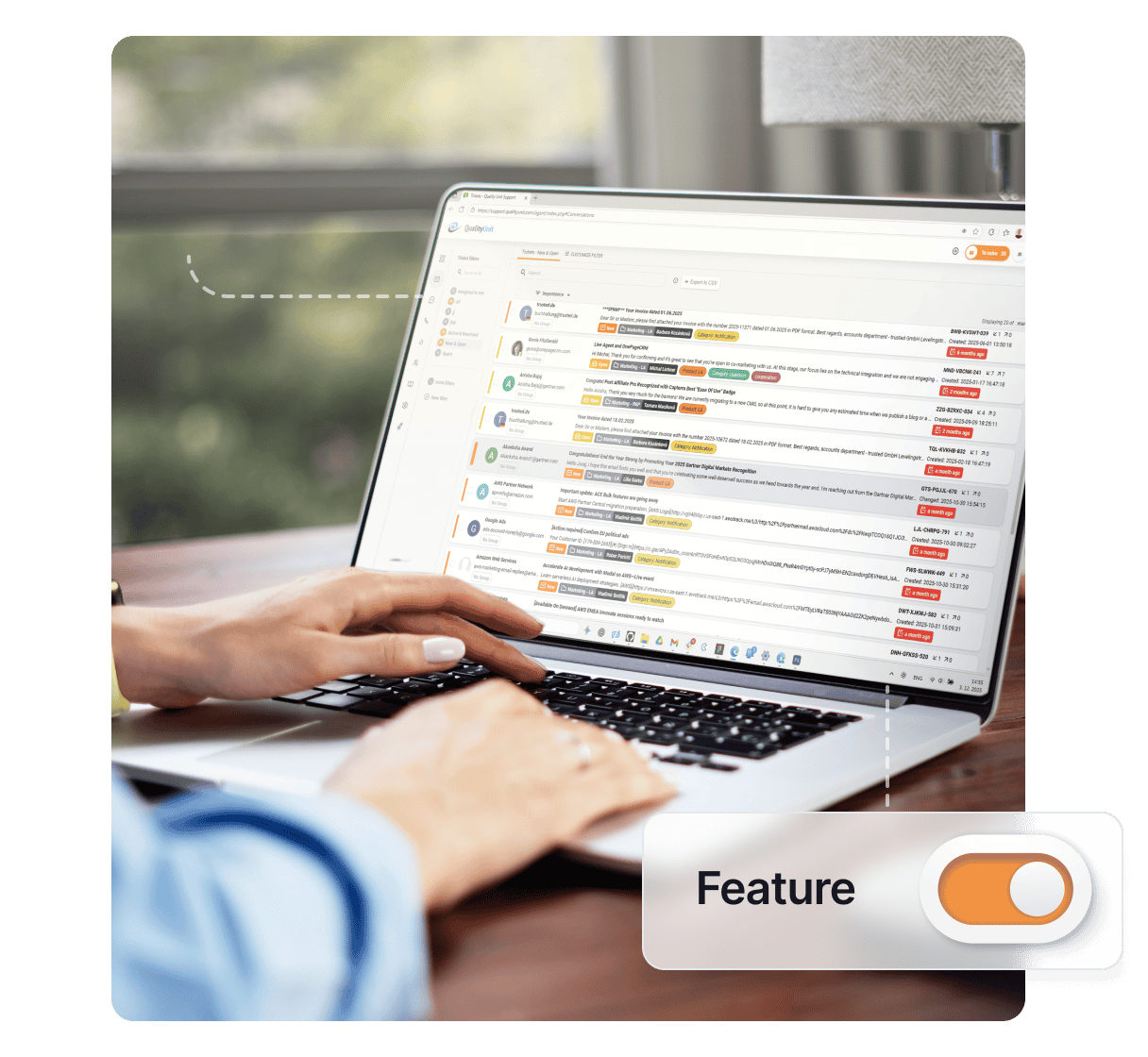
LiveAgent’s AI ticket validation and autoresponse agent automatically screens incoming support tickets for relevance and clarity, then generates accurate, knowledge-based replies for valid inquiries — reducing response times without sacrificing quality.
Not every incoming ticket deserves the same treatment. Some are straightforward questions your Knowledge Base can already answer. Others are spam, duplicates, or messages too vague to act on. The LiveAgent AI ticket validation and autoresponse agent tells the difference automatically — and sends a reply only when it should.
This AI agent evaluates each new incoming support ticket, applies your validation criteria, and generates a professional plain-text response for tickets that qualify. Tickets that do not meet the criteria are left for your agents to handle, or discarded entirely if they are spam or irrelevant.
The result is faster first response times for your customers and less routine work for your support team — without the risk of sending inappropriate or inaccurate auto-replies.
The ticket validation and autoresponse agent is triggered automatically as part of a workflow you configure in LiveAgent. Each new ticket passes through the agent before any manual review takes place.
To get this AI agent up and running, you need to integrate LiveAgent with an AI agents provider. The AI functionality of LiveAgent is currently provided exclusively by FlowHunt . Quality Unit develops both LiveAgent and FlowHunt. This allows us to keep your data safe, as well as provide priority support to LiveAgent users.
Here are the 5 main steps of how this AI agent works:
Input: The agent receives ticket data, including the message content and associated metadata.
Analyze: The AI evaluates the message for relevance, clarity, and whether it falls within a category you have defined as eligible for auto-response.
Validate: The agent determines whether the ticket meets your criteria. Spam, unclear requests, and out-of-scope messages are filtered out at this stage.
Generate: For tickets that pass validation, the agent queries your Knowledge Base and drafts a contextually appropriate, plain-text reply.
Output: The ready-to-send response is returned and can be used to trigger an automatic email reply through your LiveAgent automation rules.
LiveAgent does not charge any additional fees for setting up this feature. Usage is billed through FlowHunt’s credit-based pricing model, and the cost per ticket processed is generally low since each run involves a focused validation and response task. Your overall expenses will depend on ticket volume and the AI model selected. You can use this guide to estimate your AI costs.
Setup takes just a few steps across FlowHunt and LiveAgent. If you do not have a FlowHunt account yet, you can sign up at the FlowHunt sign-up page .
Create an automated rule: Full setup guide: Triggering FlowHunt AI agents via rules
Example rule: When a new ticket is created in a selected department, send the ticket ID and content to your FlowHunt agent via HTTP request or webhook, then use the returned response to send an automatic email reply.

The latest tips and deals delivered straight to your inbox.
Not everything that arrives in your support inbox warrants a reply. The validation step acts as the first line of defense, identifying messages that are spam, automated bounce notifications, or too vague to act on. These are excluded from the response workflow entirely, so your agents only see tickets that genuinely require attention.
For support teams that receive a high volume of repetitive questions — account access, billing, shipping status, product documentation — the autoresponse agent can handle a significant share of incoming tickets without any agent involvement. The agent matches the ticket content against your Knowledge Base and composes a reply that directly addresses the customer’s question.
The agent is designed to operate within boundaries you define. If you only want auto-responses sent for billing inquiries and password resets, you configure that in the prompt. All other ticket types pass through the validation step without a generated reply, ensuring your automatic responses never go out of scope.
Because the response is generated fresh for each ticket rather than copied from a template, the agent can adapt to the specific wording of each customer’s question while still following the tone and style guidelines you have defined. This makes auto-responses feel more natural and on-brand than traditional canned replies.
The ticket validation and autoresponse agent is built to function as one step in a larger workflow. The output — a validated response or an indication that validation failed — can feed into downstream automation rules in LiveAgent. For example, validated tickets can receive an immediate auto-reply while tickets that fail validation are automatically routed to the appropriate team or tagged for priority review.
The LiveAgent AI ticket validation and autoresponse agent gives your support team a smarter first line of response. Instead of sending automatic replies to every incoming message or relying entirely on agents to handle routine inquiries, the agent applies real validation logic before any reply goes out. Customers with clear, answerable questions get an accurate response immediately. Everything else reaches your agents in an organized, filtered queue. Get started today with a 30-day free trial and see how much time your team reclaims.
Transform your customer support efficiency with LiveAgent's AI Autoresponder, an intelligent automation tool that delivers instant, personalized responses to in...

LiveAgent's AI ticket triage and categorization automatically reads incoming support tickets and assigns the correct category tag, so your team always knows wha...

LiveAgent's AI Spam & Irrelevance Filter automatically detects and filters out irrelevant or harmful tickets before they reach your support team.