LiveAgent vs Intercom vs Zendesk: AI chatbot features compared for 2026
Three platforms, three very different approaches to AI chatbot. We compared setup time, training requirements, escalation logic, and total cost for a 20-agent team, using each vendor’s own 2026 pricing and documentation.
Published on Jul 16, 2026.
AI
Chatbots
Customer Support
Comparison
Pricing
Three platforms, three very different approaches to AI chatbot. We compared setup time, training requirements, escalation logic, and total cost for a 20-agent team, using each vendor’s own published pricing and documentation.
A quick note on timing: pricing in this space moves fast. Zendesk restructured its AI pricing tiers in May 2026, and Intercom (which renamed its parent company to Fin in May 2026) is in the middle of a pending acquisition by Salesforce, announced in June 2026. None of that has changed pricing yet, but it’s worth confirming current numbers on each vendor’s site before you buy, especially on a multi-year contract.
What we compared and how
We looked at four things that actually change how a chatbot performs once it’s live, rather than a marketing feature list:
Setup time. How long it realistically takes to get from signup to a working chatbot, based on vendor documentation and published case studies.
Training requirements. What the chatbot needs to learn from (knowledge base, past tickets, manual flows) before it gives reliable answers.
Escalation logic. How cleanly the chatbot hands off to a human agent, and how much control you have over when that happens.
Total cost for a 20-agent team. Not just the seat price, since that’s rarely the number that matters most once AI usage fees are added.
All pricing and feature details below come from each vendor’s own pricing pages and help documentation, cross-checked against third-party pricing breakdowns published in 2026. Where a number is an estimate rather than a vendor-quoted figure, we’ve said so.
LiveAgent AI Chatbot: strengths and limits
What it is: The LiveAgent AI Chatbot
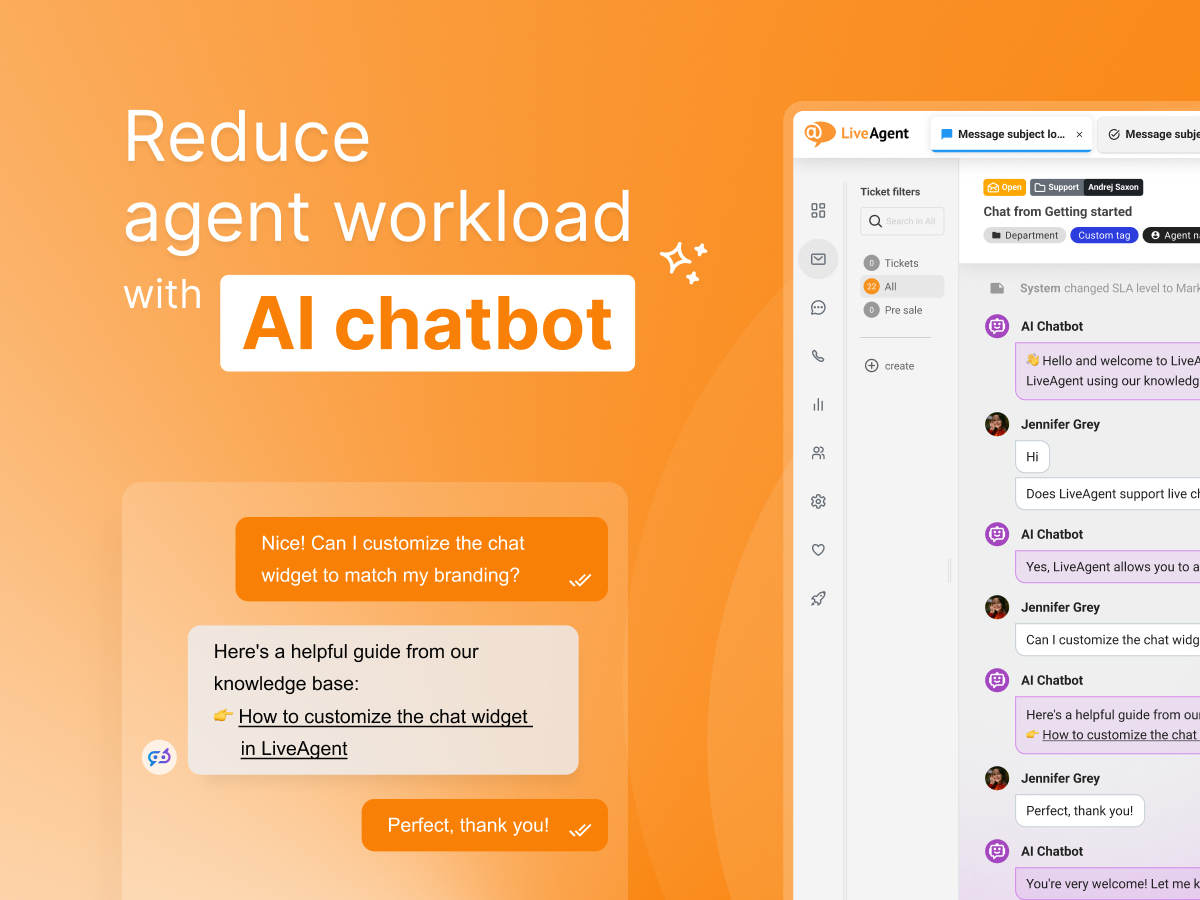
is bundled into every LiveAgent plan, starting with the entry-level Small plan. It answers using your knowledge base, website content, and uploaded documents, operates in 100+ languages, and hands off to a human agent with full context when it can’t help.
Strengths:
Included on every plan at no extra AI fee. There’s no per-resolution or per-outcome charge on top of your seat price, which is a real structural difference from the other two platforms in this comparison.
Fast to set up. LiveAgent’s own published customer story with M4Markets
shows the chatbot, ticketing system, automation rules, and multilingual support all going live in two weeks.
Multilingual out of the box, which matters if you’re supporting customers across regions without hiring region-specific staff.
Limits:
LiveAgent doesn’t publish an independent deflection rate or automation benchmark the way Intercom and Zendesk do, so it’s harder to model expected ROI purely from public numbers.
It’s positioned around answering questions and handing off cleanly, not the kind of multi-step agentic workflow (processing a refund through a payment API, for example) that Intercom Fin and Zendesk’s Advanced AI tier are built to do out of the box.
Intercom Fin AI: strengths and limits
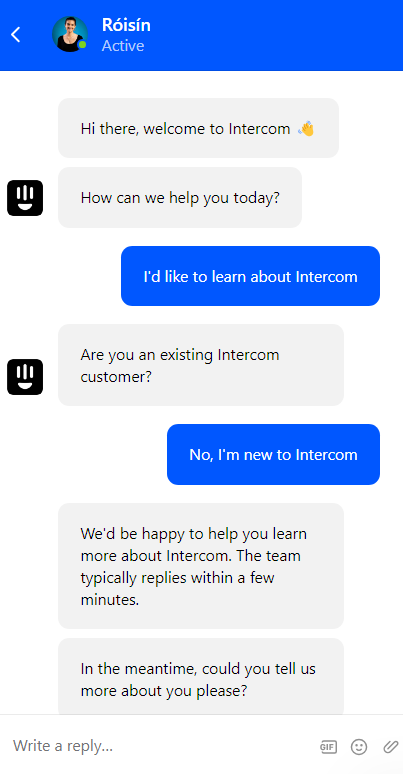
What it is: Fin is Intercom’s AI agent, priced separately from Intercom’s seat plans at $0.99 per billable outcome (a resolution, a procedure handoff, or a disqualification). It’s available bundled with Intercom or as a standalone layer on top of other helpdesks, including Zendesk and Salesforce.
Strengths:
Genuinely mature and widely deployed, with real-world resolution rates Intercom itself has disclosed at 42 to 50%, which is more transparent than most vendors in this space offer.
True multi-channel reach, including voice, and workflow automation through configurable procedures rather than just scripted Q&A.
Can run standalone on an existing helpdesk, so you’re not forced to migrate your whole stack just to get Fin.
Limits:
The pricing model means your bill grows as Fin gets better at its job. There’s no cap by default, so a jump in resolution volume shows up directly as a bigger invoice.
Full workflow automation requires the Advanced plan ($85/seat/month annual), not the entry-level Essential plan, so the realistic starting price for a working setup is higher than the advertised $29 headline.
Intercom’s pending acquisition by Salesforce, announced in June 2026 for roughly $3.6 billion, is expected to close around Q4 of Salesforce’s fiscal 2027. Pricing is unchanged for now, but it’s a real variable for anyone signing a multi-year contract today.
Zendesk AI: strengths and limits
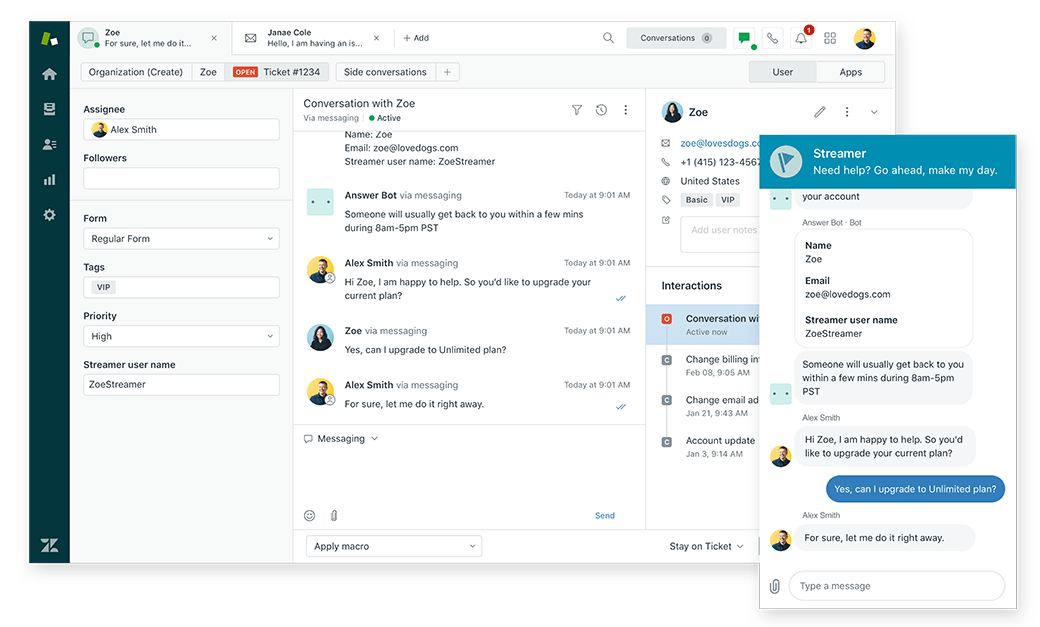
What it is: Zendesk sells AI in two tiers. Essential ships free inside every Suite plan but is limited to generative replies pulled from your help center, with a hard monthly cap on some plans. Advanced AI, built on Zendesk’s 2024 acquisition of Ultimate.ai, adds a visual dialogue builder, API-connected actions, and is billed separately per automated resolution.
Strengths:
Deep native integration if you’re already running your support operation inside Zendesk, since the AI agent sits directly on top of your existing tickets and help center content.
Advanced AI supports real actions through API integrations (Shopify, Salesforce, Jira), not just answers, which puts it closer to Intercom Fin than to a basic FAQ bot.
Zendesk’s May 2026 restructuring folded some of what used to be a flat $50/agent add-on into standard Suite plans, though the per-resolution charge for actual usage remains separate.
Limits:
The Essential tier is a genuinely lighter product: it can’t run scripted dialogue flows, take authorized actions, or call third-party APIs. Zendesk has confirmed Essential is legacy functionality and will sunset entirely on December 31, 2026.
Advanced AI’s per-resolution pricing (roughly $1.50 to $2 depending on committed volume) auto-bills for overages as of January 2026, with no prior warning and no cap, according to third-party billing breakdowns.
Support teams on G2 and Reddit have flagged onboarding the AI layer as more burdensome than expected, and limited ability to export or analyze what customers are actually asking the bot.
Join our newsletter
The latest tips and deals delivered straight to your inbox.
Feature comparison table
Category
LiveAgent AI Chatbot
Intercom Fin AI
Zendesk AI
AI included in base plan
Yes, all plans
Yes, but usage billed separately
Essential tier only; Advanced billed separately
Multi-step actions (API-connected)
Limited
Yes, via procedures
Yes, on Advanced tier
Voice support
Not native
Yes
Via Contact Center add-on
Multilingual
100+ languages, all plans
Yes
Yes
Published resolution rate
Not publicly benchmarked
42-50% (vendor-disclosed)
Not independently disclosed
Setup time (published examples)
~2 weeks (M4Markets)
Under an hour standalone; longer for full workflows
Days to weeks depending on flow complexity
Pricing model
Flat, bundled in seat price
Per-outcome, $0.99 each
Per-resolution, ~$1.50-$2
Pricing for a 20-agent team
To keep this apples-to-apples, we modeled all three platforms against the same rough scenario: 20 agents, about 3,000 customer conversations a month, and a moderate AI resolution rate.
LiveAgent: The Medium plan (needed at this team size for call center and IVR features) lists at $29 per agent per month on annual billing, which works out to $580 a month, or roughly $6,960 a year. AI Chatbot and AI Answer Assistant are both included at that price, with no per-resolution charge on top, regardless of how many conversations the chatbot handles. LiveAgent is currently running a promotional rate that brings this down further for new customers through the end of 2026, so check the current price
before budgeting off the list rate.
Intercom Fin: Twenty seats on the Advanced plan (needed to unlock workflow automation and multiple inboxes) come to $85 a seat on annual billing, or $1,700 a month. Add Fin resolutions: at roughly 1,350 automated resolutions a month (a 45% resolution rate against 3,000 conversations) and $0.99 each, that’s another $1,336 a month. Baseline total lands around $3,036 a month, or roughly $36,400 a year, before Copilot or any other add-ons. Add Copilot for all 20 agents at $29 each and you’re closer to $3,616 a month.
Zendesk: Twenty seats on Suite Professional (the tier most teams land on for structured, multi-channel support) run $115 a seat annual, or $2,300 a month. Advanced AI resolutions at the same 1,350-a-month volume, priced at roughly $1.50 to $2 each, add $2,025 to $2,700 a month. That puts the baseline between $4,325 and $5,000 a month, or roughly $52,000 to $60,000 a year, before Copilot. One independent breakdown modeling a comparable 20-agent, 3,000-ticket scenario put the realistic all-in Zendesk cost at $6,000 to $8,000 a month, which lines up with our estimate once Copilot and overage billing are factored in.
The gap comes down to one structural difference: LiveAgent’s AI is a flat cost regardless of volume, while Intercom and Zendesk both charge per resolution on top of seats. That makes LiveAgent more predictable at any volume, and makes the other two cheaper only if your resolution volume stays low relative to your seat count.
Which platform fits which team size
If none of these three feels like the right fit, our best AI chatbots for your business in 2026
roundup compares a broader set of vendors, including ChatGPT-based tools and other AI-first platforms outside the traditional helpdesk category.
Small teams and tight budgets: If you’re weighing cost predictability heavily, or you don’t want a bill that grows every time your AI chatbot gets better at its job, LiveAgent’s flat, bundled pricing is the simplest to budget for, especially under 20 to 30 agents. Our buyer’s checklist for choosing an AI chatbot
covers how to pilot it against your own ticket history before committing.
Mid-market teams that want deep workflow automation and are comfortable with variable costs: Intercom Fin is a strong fit if you want an AI agent that takes real actions, not just answers questions, and you’re willing to model a bill that scales with automation success. It’s also worth a look if you want to run Fin on top of a helpdesk you already use rather than switching platforms.
Large teams already invested in Zendesk: If your support operation already lives inside Zendesk and switching platforms isn’t realistic, Zendesk’s Advanced AI gives you native, API-connected automation without leaving your existing setup. Just budget for the per-resolution costs on top of your Suite plan, and keep an eye on the overage billing changes that took effect in January 2026.
Conclusion
None of these three platforms is a universal “best” choice. LiveAgent’s flat, bundled pricing is the most predictable option for teams that want AI cost to stay flat as volume grows. Intercom Fin and Zendesk’s Advanced AI both go further on multi-step, API-connected actions, at the cost of a bill that scales with how well the AI performs. Which trade-off makes sense depends on your team size, your resolution volume, and how much variability you’re willing to build into next year’s budget.
For most team sizes, LiveAgent is the cheaper option because its AI chatbot is included in the seat price with no per-resolution charge. Intercom and Zendesk both add usage-based AI fees on top of seats, which can outgrow the base subscription cost as automation volume increases.
It's built primarily to answer questions from your knowledge base and hand off cleanly to a human agent, rather than executing multi-step actions through connected APIs the way Intercom Fin's procedures or Zendesk's Advanced AI actions do.
Intercom has disclosed real-world resolution rates between 42% and 50% across its customer base, which is more transparent than most competitors in this category.
Zendesk has confirmed its Essential AI tier is legacy functionality as of May 2026 and will sunset on December 31, 2026. Teams that need ongoing AI automation will need the separately priced Advanced AI tier.
Based on public pricing, LiveAgent runs around $7,000 a year at this team size with AI included. Intercom Fin lands closer to $36,000 to $43,000 a year depending on add-ons, and Zendesk runs roughly $52,000 to $80,000 a year once AI resolution fees are factored in. All three figures depend heavily on your actual conversation volume.
LiveAgent vs Intercom's Fin AI: The Honest AI Chatbot Comparison for 2026
Compare LiveAgent's AI Answer Assistant and AI chatbot, powered by FlowHunt, against Intercom's Fin AI Agent on pricing, setup speed, real-world resolution rate...
A step-by-step buyer's checklist for choosing an AI chatbot in 2026: use case, channels, budget, integrations, a week-1 pilot, red flags, and a scorecard.