

Every support team eventually hits the same wall: the queue grows faster than agents can sort it. A ticket comes in, someone has to read it, figure out what it is about, decide how urgent it is, and route it to the right person. Multiply that by a hundred or a thousand, and you have a serious bottleneck. That bottleneck is what good ticket triage solves, and in 2026, AI does the heavy lifting.
Four platforms come up repeatedly when teams look for help desk software with strong ticket triage: BoldDesk, InvGate, HaloITSM, and LiveAgent. Each takes a different approach to automation, routing, and categorization, and each has strengths worth knowing about before you commit to a demo or a trial.
This article compares them head to head across the dimensions that matter most for ticket triage: AI classification, routing rules, ease of setup, pricing, and overall fit for different team types. The goal is to help you decide which one matches how your support operation actually works.
What is ticket triage and why it matters
Ticket triage is the process of capturing an incoming support request, determining what it is about, assigning a priority, and routing it to the right agent or team. It happens before any real resolution work begins. When done well, it is invisible. When done poorly, tickets sit in the wrong queues, urgent issues get buried, and response times slide.
Automated ticket triage uses AI to read each ticket, identify intent, detect sentiment, apply tags, set priority, and route it, all without a human touching it. The best systems combine rule-based logic with machine learning so they get smarter over time. The payoff is faster first response times, fewer misrouted tickets, and a support team that spends less time on administration and more time solving problems.
The platforms at a glance
BoldDesk
BoldDesk, built by Syncfusion, positions itself as a modern, AI-first help desk. Its ticket management system centers on an AI Copilot that classifies tickets the moment they land, predicts fields like category and issue type, detects sentiment, and suggests replies. The platform also supports skill-based and workload-based routing, making it fairly flexible for teams that want to automate assignment without building complex rule sets.
BoldDesk works well for customer-facing support teams that handle email, chat, and social channels. The interface is clean and fast, and the AI features are designed to reduce clicks rather than add configuration overhead. Some of the more advanced AI capabilities, however, are tied to specific plan tiers, so it is worth checking what each plan actually includes before committing.
InvGate
InvGate Service Management is an ITSM platform built around ITIL-aligned processes. Its AI Hub includes an Intelligent Triage Agent that classifies tickets by priority, category, and potential major-incident relationships, then hands them off to a Smart Assignment Agent that considers skills, workload, and ticket type. The platform also features AI-generated ticket summaries, knowledge suggestions, and suggested responses.
InvGate shines in internal IT service desk environments. It ties tickets to assets and configuration items, so an incoming ticket about a failing laptop can automatically pull in the hardware profile, warranty status, and assigned user before an agent even opens it. The visual workflow builder makes it straightforward to design conditional routing paths without writing code. For teams that live and breathe ITIL, InvGate is a natural fit.
HaloITSM
HaloITSM is a comprehensive IT service management platform with deep configurability and a strong AI engine. Its Neo agent handles triage, summarization, categorization, and smart dispatch. Halo can use vector-based matching against historical ticket data or LLM-based instant triage that works from day one, depending on how you configure it. It also features case clustering, which automatically groups related tickets under a single problem record.
Halo is built for complexity. It supports multi-department operations, customizable approval workflows, and granular SLA matrices. MSPs and enterprise IT teams tend to gravitate toward Halo because it can model almost any triage logic they need. The trade-off is that this depth comes with a steeper learning curve and a longer implementation timeline. If you need basic queue sorting and nothing more, Halo may feel like overkill.
LiveAgent
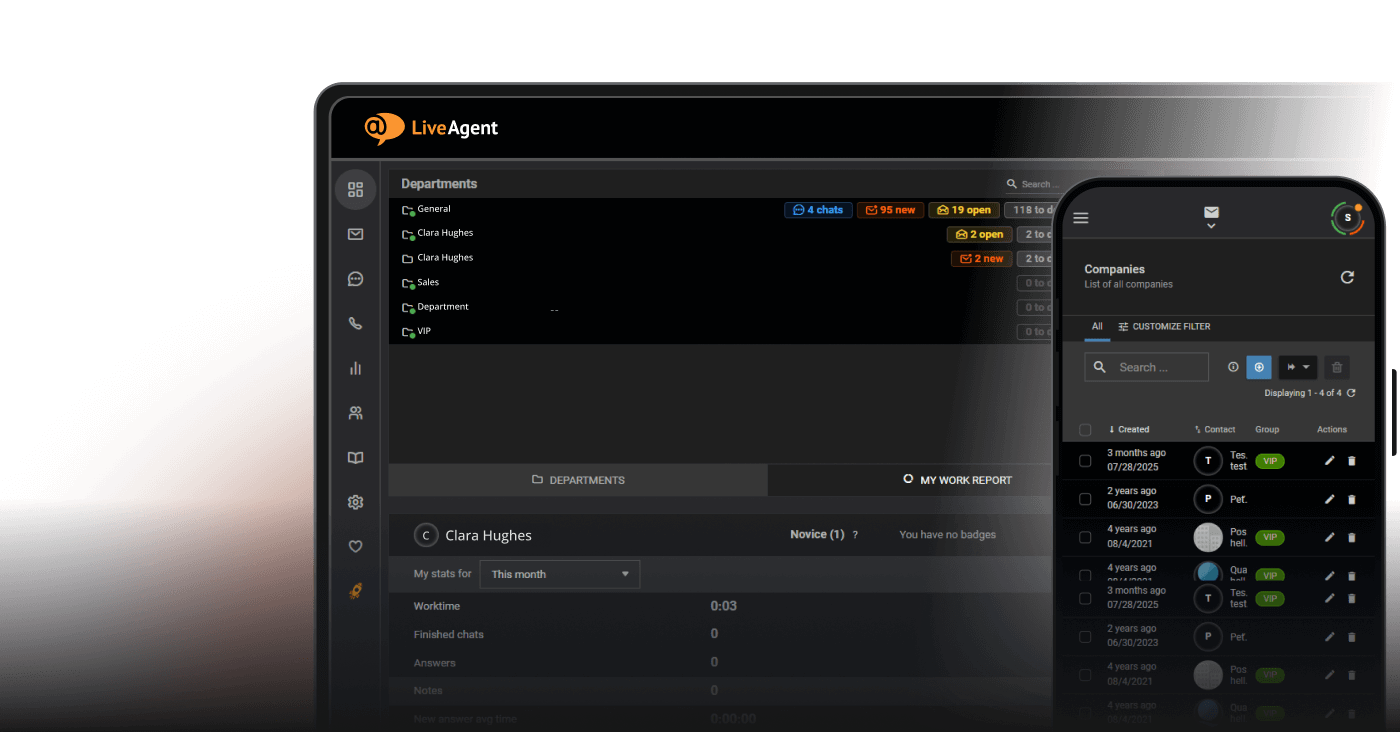
LiveAgent is a help desk platform that combines ticketing, live chat, call center, and knowledge base functionality into a single system. Its approach to ticket triage is built around AI-powered categorization and tagging that reads each incoming ticket, understands what the customer is asking about, and assigns the correct category tag automatically. This means agents open the queue and see at a glance whether a ticket is a bug report, a billing question, a cancellation request, or spam.
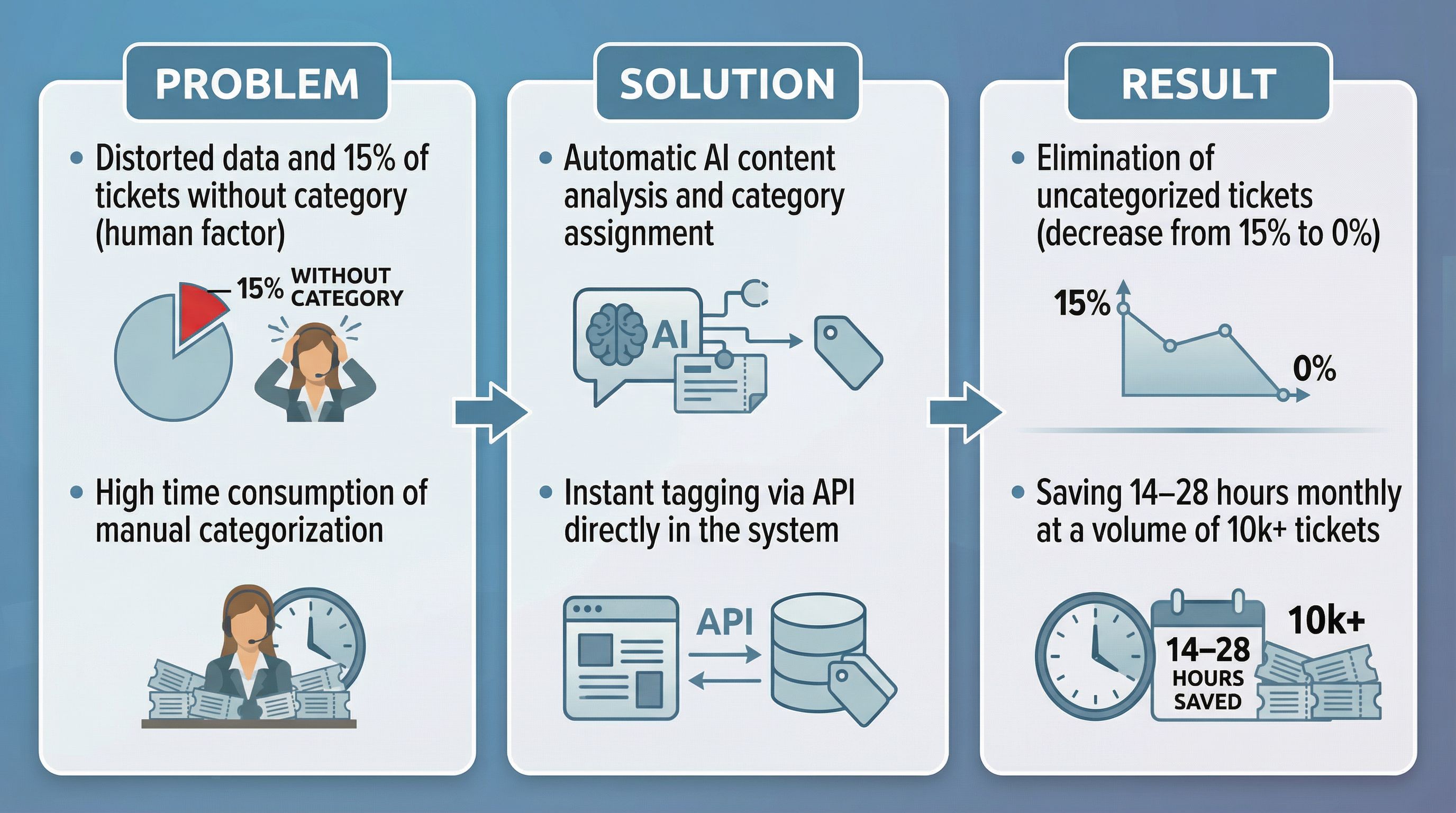
The ticket triage and categorization agent works as part of a larger automation flow. It takes a ticket ID as input, fetches the ticket content, analyzes it, and returns the appropriate tag. That tag can then trigger automation rules that route the ticket to the right department, set priority, or even trigger an AI autoresponder to send a knowledge-based reply without human intervention.
Alongside categorization, LiveAgent offers automated ticket distribution with multiple assignment methods, including round-robin, ring-to-all, and max utilization. The AI ticket validation and autoresponse agent screens tickets for relevance and clarity, filters out spam, and generates accurate replies for valid inquiries, all before a human agent ever sees the ticket.
LiveAgent is also priced transparently. Plans start at $15 per agent per month for small teams, scaling to $49 per agent per month for the all-inclusive plan, with an enterprise tier at $69. All plans include the core AI agent functionality. The platform is available in over 29 languages and serves more than 7,000 businesses worldwide.

Ready to grow your business?
Start your free trial today and see results within days.
Side-by-side comparison table
| Feature | BoldDesk | InvGate | HaloITSM | LiveAgent |
|---|---|---|---|---|
| AI ticket classification | Yes, via AI Copilot | Yes, via AI Hub Triage Agent | Yes, via Neo AI agent | Yes, via AI triage and categorization agent |
| AI priority detection | Yes | Yes | Yes | Yes, via automation rules |
| Skill-based routing | Yes | Yes | Yes | Yes, via automated ticket distribution |
| Sentiment analysis | Yes | Yes | Yes | Yes, via AI agent |
| AI autoresponses | Yes | Yes, via suggested responses | Yes | Yes, via AI autoresponder |
| Multi-channel support | Email, chat, social, web | Email, portal, Teams, phone | Email, Teams, phone, portal | Email, live chat, social, phone, knowledge base |
| No-code rule builder | Yes | Yes, visual workflow builder | Yes, but complex | Yes, via automation rules |
| Pricing transparency | Competitive, per-agent plans | Public, tiered pricing | Higher, all-inclusive model | Fully public, from $15/agent/month |
| Free trial | Yes | Yes, 30 days | Yes | Yes, 30 days, no credit card |
| Best fit | Customer support, mid-market | Internal IT, ITIL-aligned | Enterprise ITSM, MSPs | Customer support, mixed teams, multi-channel |
AI triage and categorization: how they compare
BoldDesk uses an AI Copilot that predicts fields like category, issue type, and priority based on ticket content. It works well for teams that want fast, out-of-the-box AI without extensive configuration. The AI also detects duplicates and can suggest merges, which keeps the queue clean.
InvGate takes a more structured approach. Its Intelligent Triage Agent classifies tickets on creation and links them to the service catalog. If a ticket relates to a known asset, the AI pulls in relevant context automatically. This is especially useful for IT teams that need asset-aware triage, though it is less relevant for customer support teams that do not deal with hardware or software inventory.
HaloITSM offers the most flexible AI triage of the group. It can use vector-based matching against historical tickets or LLM-based instant triage with no history needed. You can configure it to apply categories, set impact and urgency, and route tickets based on complex criteria. The downside is that this flexibility requires more setup effort.
LiveAgent takes a practical, automation-first approach. The AI triage and categorization agent reads each ticket, understands the intent, and assigns a category tag. From there, the platform’s automation rules take over: routing the ticket, setting priority, applying SLA timers, and triggering autoresponses where appropriate. The advantage is that everything is built into the same platform — there is no separate AI module to configure or bolt on. The AI works alongside the automated ticket distribution engine to make sure tickets reach the right agent based on workload, department, or skill.
Join our newsletter
The latest tips and deals delivered straight to your inbox.
Routing and assignment
Routing is where triage meets the real world. A ticket that is correctly categorized but sent to the wrong person is still a failed triage.
BoldDesk supports round-robin, load-based, and skill-based routing. Its AI can also handle routing as part of its automation workflows, and the platform allows you to run separate AI agents for classification versus assignment, giving you control over each step.
InvGate uses condition-based routing tied to its service catalog. When a user selects a service offering, the ticket inherits routing rules automatically. The Smart Assignment Agent considers skills, workload, and historical resolution data to assign tickets to the best-fit agent.
HaloITSM offers smart dispatch that evaluates technician skills, current workloads, and historical resolution patterns. It also supports load-balancing, round-robin, and multi-conditional rules. For MSPs managing multiple clients, Halo’s routing depth is a significant advantage.
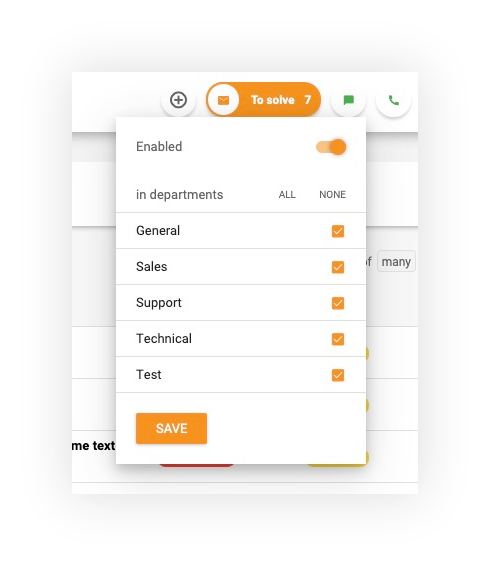
LiveAgent routes tickets through its automated ticket distribution system, which supports ring-to-all, round-robin, max utilization, and random assignment. These methods are configured through automation rules that can combine conditions like department, tag, priority, and agent availability. The result is a routing system that is flexible without being complex to set up. For teams that want to chain categorization and routing into a single automated flow, the combination of AI triage and categorization with rule-based distribution is straightforward and effective.
Ease of setup and learning curve
BoldDesk is the easiest to set up among the four. The interface is intuitive, and the AI features are designed to work with minimal configuration. Teams can go from sign-up to a working triage flow in hours rather than days.
InvGate sits in the middle. The visual workflow builder makes it approachable, but the ITIL-aligned structure means there is more to configure upfront: categories, service catalog items, asset relationships, and automation rules all need to be mapped out.
HaloITSM has the steepest learning curve. It is also the most configurable, which is a trade-off. Teams that need that configurability will appreciate it. Teams that do not may find it overwhelming.
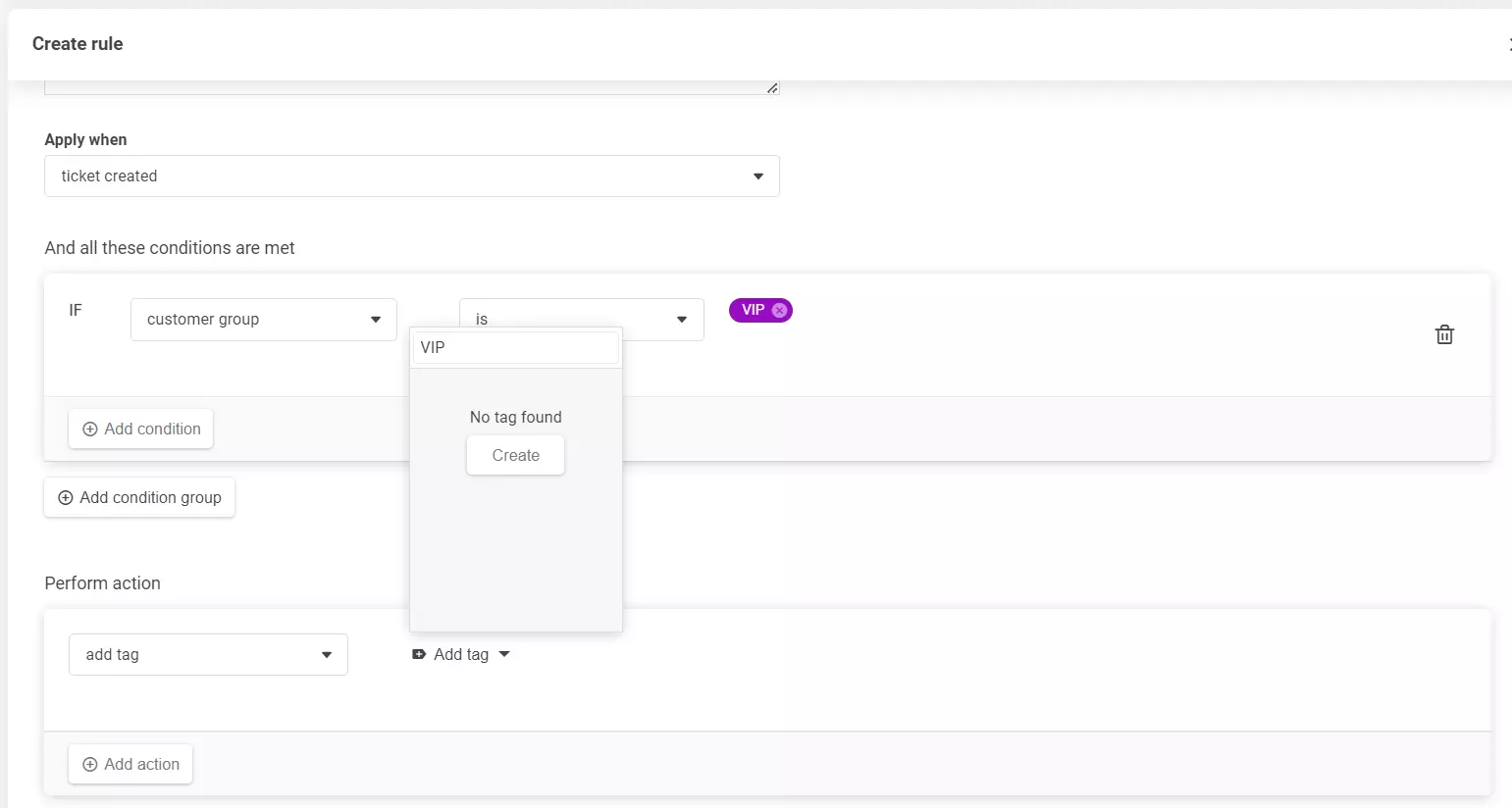
LiveAgent balances ease of use with depth. The interface is clean and modern, and the AI triage and categorization agent is designed to work out of the box once connected to the FlowHunt AI provider. The automation rules follow a clear condition-action logic that is easy to understand, and the 30-day free trial with no credit card requirement makes it low-risk to test. For teams that need to get triage working quickly without sacrificing customization options, LiveAgent hits a sweet spot.
Pricing and value
Pricing is a practical concern for most teams, and the four platforms take different approaches.
BoldDesk offers competitive per-agent pricing across multiple tiers. AI features are available across plans, but more advanced capabilities may require higher tiers. The pricing is generally accessible for small to mid-sized teams.
InvGate publishes its pricing openly, which is a plus. Plans start at approximately $25 per agent per month for the Starter tier, with Pro and Enterprise options available. The transparent pricing makes it easy to budget.
HaloITSM uses an all-inclusive model at a higher price point, typically around $90 to $95 per agent per month depending on volume. This includes all AI features and modules without add-ons. For enterprise teams that need everything, this can be good value. For smaller teams, it may be prohibitive.
LiveAgent offers transparent, tiered pricing starting at $15 per agent per month for the Small Business plan, $29 for Medium, $49 for Large, and $69 for Enterprise. All plans include the core AI agent functionality, including the ticket triage and categorization agent. The 30-day free trial requires no credit card, and you can switch plans, upgrade, or downgrade at any time. For teams that want a full-featured help desk with AI triage at a predictable price, the value proposition is strong.
Which one should you choose?
The right choice depends on your team’s context: who you support, how many tickets you handle, and how complex your routing logic needs to be.
Choose BoldDesk if you run a customer-facing support team that wants fast, AI-driven triage with minimal setup. It is a strong fit for teams that prioritize ease of use and a clean modern interface, especially if your channels are email, chat, and social.
Choose InvGate if you manage an internal IT service desk with ITIL-aligned processes and asset-heavy workflows. The AI Hub’s ability to link tickets to assets and the visual workflow builder make it a natural fit for mid-to-large IT organizations.
Choose HaloITSM if you are an enterprise ITSM team or MSP that needs maximum configurability and can invest time in setup. The depth of triage automation and the flexibility of the AI engine are unmatched, but you will need the resources to configure it properly.
Choose LiveAgent if you want a practical, all-in-one help desk where AI triage, categorization, routing, and autoresponse work together in a single platform at a transparent price. The AI ticket triage and categorization agent handles the sorting, the automation rules handle the routing, and the AI autoresponder handles the first reply. It works for customer support teams, internal IT, and mixed environments alike. Plans start at $15 per agent per month , and the generous free trial means you can test it thoroughly before committing.
If you are still unsure, the best next step is to run a trial with your own ticket data. Give each platform a batch of real tickets and measure classification accuracy, routing correctness, and how much manual correction is needed. That will tell you more than any comparison article ever could.
Ready to see AI triage in action?
LiveAgent's AI ticket triage and categorization agent sorts and routes tickets from every channel, with core AI functionality included at every plan level, no separate add-on required.