



Benefits of Chatbots: Top Business Examples & Use Cases
Discover how AI chatbots are revolutionizing business interactions, boosting efficiency, reducing costs, and delivering 24/7 customer support. Explore top benef...
11 min read
AI
Chatbots
+2

Spain’s new customer service law bans chatbot-only support and requires 95% of calls answered within three minutes. Here’s who must comply, what changes, and how to get your support stack ready before the December 2026 deadline.
Spain just set a legal deadline for how fast a customer can reach a real person. Under Law 10/2025 on Customer Service, companies have to answer 95% of calls within three minutes, and automated systems can no longer be the only option. The law took effect on 28 December 2025, and companies have until 28 December 2026 to comply. If you serve customers in Spain, that’s the date your current setup gets tested.
The law applies to:
Sectors like finance and telecom already have their own rules. For them, this law works on top of existing regulation, reinforcing quality and protection standards rather than replacing them.
A human on the line, not just a bot. Customers get the right to talk to a live agent, not only an automated system. Companies can’t rely exclusively on chatbots or IVR menus to handle a request.
Faster answers. Companies must answer 95% of calls, on average, within three minutes. Response times for other channels are also capped: up to 15 days for general queries or complaints, down to two hours for incidents affecting basic services.
No surprise fees. The price shown at checkout has to match the final bill exactly. Hidden management or handling fees are banned.
Clearer subscription rules. For auto-renewing subscriptions, companies must notify customers at least 15 days before renewal and offer an easy way to cancel.
Sales calls need real consent. Contracts signed during unsolicited sales calls are void unless the customer explicitly confirms them. Sales and customer service also need to be kept clearly separate.
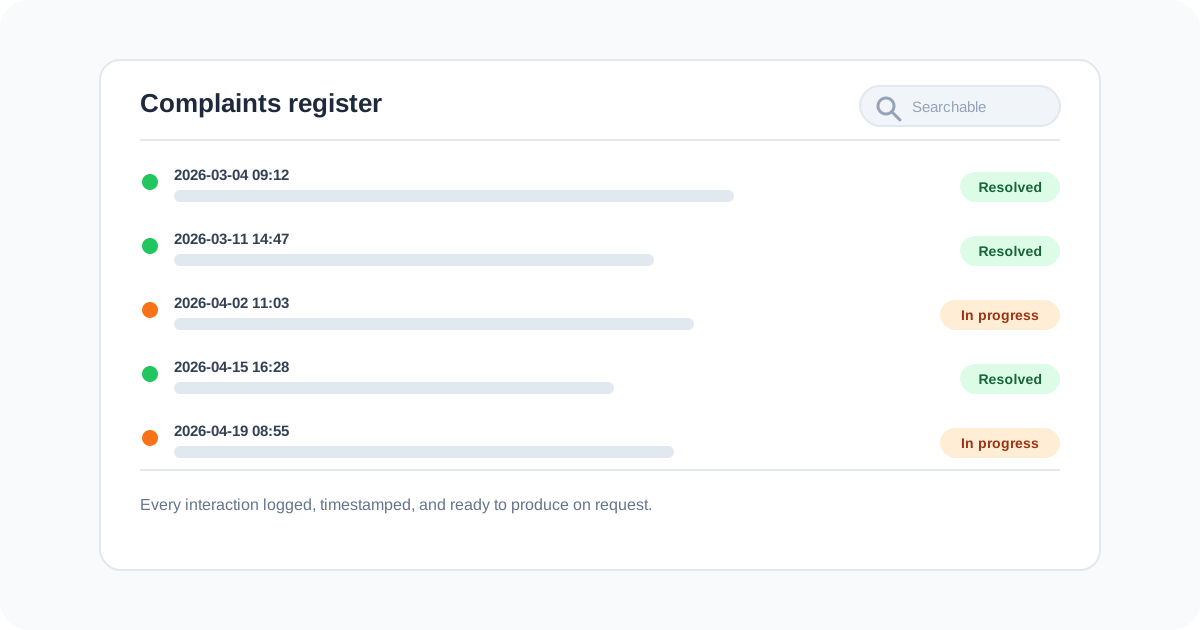
A paper trail for everything. Companies must keep a complaints register and retain evidence of compliance. If a dispute comes up, they need to be able to show what happened, when, and how it was resolved.
Genuine reviews only. Buying or selling reviews is banned. Companies must verify that published reviews come from people who actually bought or used the product, within the last 30 days.
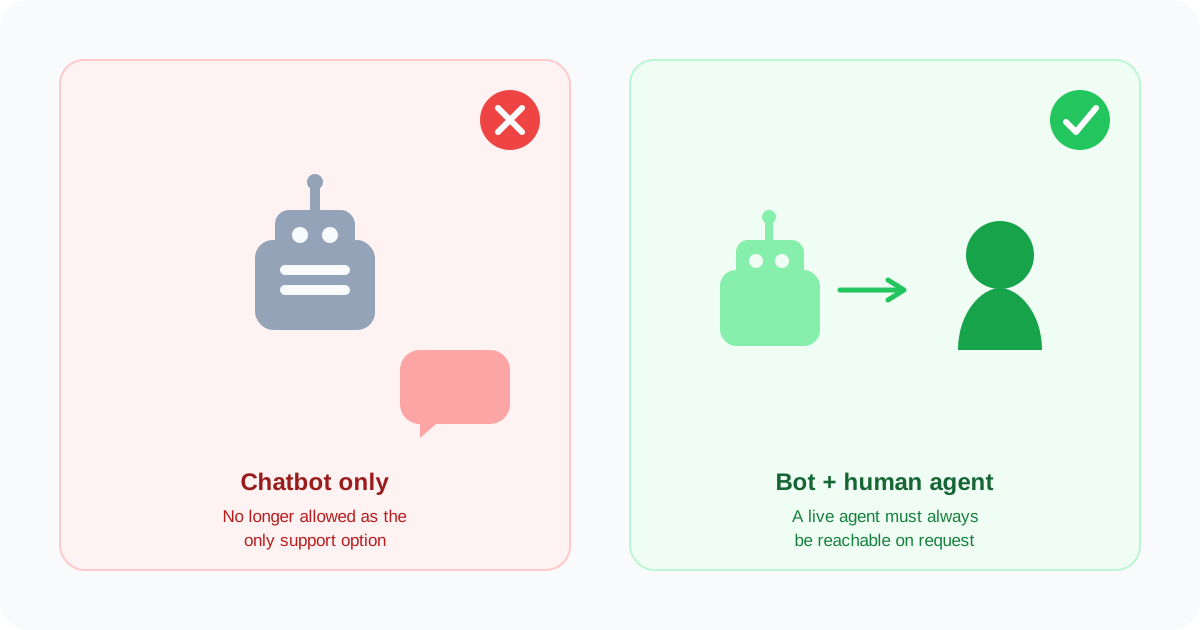
Read through the list above and a pattern shows up: almost every requirement depends on how support is actually run day to day.
None of this is achievable with a scattered mix of a shared inbox, a separate phone line, and a spreadsheet for complaints. It needs a system that ties channels together and keeps a record automatically.
If your company serves customers in Spain, a few practical questions are worth answering now:
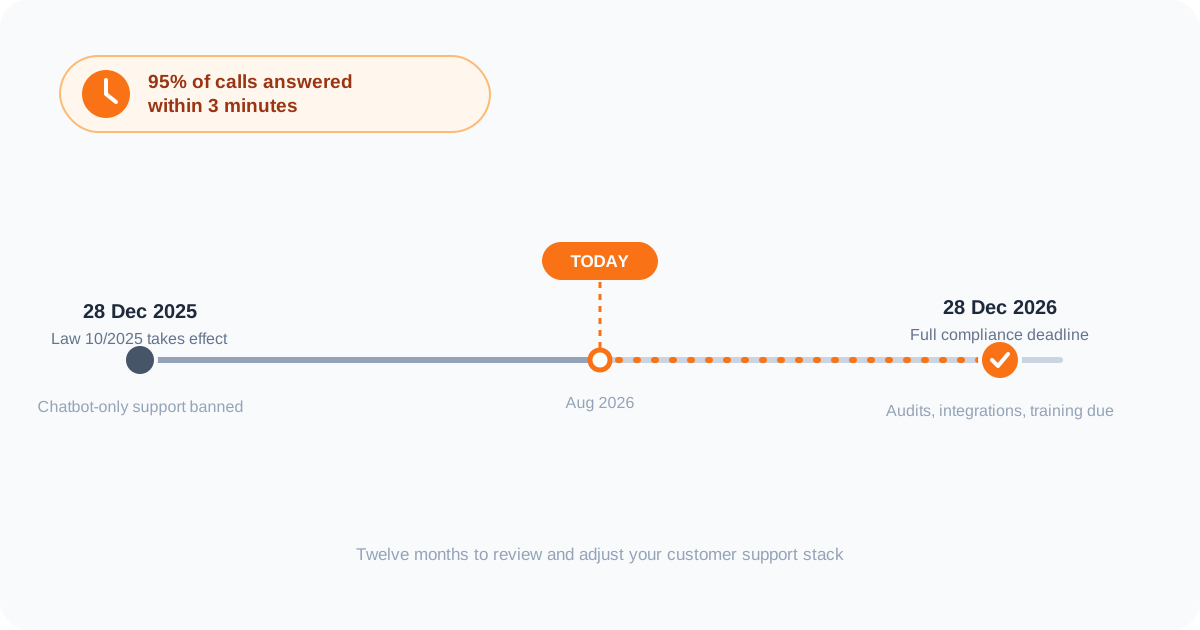
Twelve months sounds like a long runway, but audits, integrations, and staff training take time. Companies that start reviewing their support stack now will have room to adjust. Companies that wait until the last quarter of 2026 may not.

The latest tips and deals delivered straight to your inbox.
Spain isn’t acting in isolation. The EU is working on its own Digital Fairness Act, which would target dark patterns, subscription and cancellation flows, and manipulative design across the bloc, and consumer rules like this typically apply to any company serving EU consumers, regardless of where it’s based (source ). That proposal is expected to be tabled for adoption in the third quarter of 2026, so it’s still in the pipeline rather than in force (source ). But the direction is consistent: the EU’s 2026 consumer agenda already points toward stronger enforcement and centralised investigation of consumer complaints across member states (source ). Spain’s law is a national implementation of that same instinct, arriving earlier and with sharper deadlines than most. If the EU-level rules land as expected, other member states will likely follow with their own versions, and companies that already run compliant support operations in Spain will have a head start everywhere else.
Spain’s Law 10/2025 turns “the customer should be able to reach a person” from a nice-to-have into a legal requirement with a hard deadline. Meeting it isn’t just a policy update, it’s a test of whether your phone, chat, and email channels are tied together, visible in real time, and logged well enough to prove what happened if a customer disputes it. Twelve months is enough time to fix that, but only if the review starts now rather than in the last quarter of 2026.
Share this article
Lilia is a content manager at LiveAgent. Passionate about customer support, she crafts engaging content that highlights the power of seamless communication and exceptional AI-powered service.

Discover how AI chatbots are revolutionizing business interactions, boosting efficiency, reducing costs, and delivering 24/7 customer support. Explore top benef...

Chatbots enhance customer service by automating routine tasks, handling multiple inquiries simultaneously, and reducing costs. They improve efficiency and scala...

Discover the essentials of real-time customer support, including trends like live chat and customer communities, and strategies such as speed, accessibility, an...
Cookie Consent
We use cookies to enhance your browsing experience and analyze our traffic. See our privacy policy.