



TLDR
A customer success manager (CSM) helps existing customers get real value from a product, so they stay, renew and buy more. A CSM onboards new customers, checks account health, runs regular reviews and spots churn risks early. The main KPIs are churn rate, net revenue retention and customer health score.
What is a customer success manager?
A customer success manager is the person who makes sure customers reach their goals with your product after they buy it. The job is proactive: a CSM contacts customers before problems appear, not only when they ask for help.
The role is common in software and subscription businesses, where revenue depends on customers staying month after month. A CSM is usually measured on retention and growth of the accounts they own, not on the number of tickets they close.
What does a customer success manager do?
A customer success manager onboards new customers, checks how they use the product, meets them regularly and acts on signs of churn. They also find chances for renewals and upgrades, and they bring customer feedback back to the product team.
Typical CSM responsibilities are:
- Onboarding. Help new customers set up the product and reach their first result quickly. Our SaaS customer onboarding checklist is a good starting point.
- Health monitoring. Track usage, open tickets and satisfaction to see which accounts are healthy and which are at risk.
- Business reviews. Meet key customers every few months to review goals, results and next steps.
- Churn prevention. Contact at-risk customers early with a plan to fix the problem. Read more about churn .
- Renewals and expansion. Prepare renewals and spot customers who need a bigger plan or more features. Our guide on how to upsell covers this side.
- Customer voice. Collect feedback and share it with the product and support teams.
Customer success manager job description template
A customer success manager job description should name the goal of the role, the main responsibilities and the skills you need. Use this template and adjust it to your product and customers.
Job title: Customer Success Manager
About the role: You will own a group of customer accounts and help them reach their goals with our product. Your aim is to keep customers successful, so they renew and grow with us.
Responsibilities:
- Onboard new customers and guide them to their first result
- Monitor account health and act on churn risks
- Run regular business reviews with key accounts
- Manage renewals and find upgrade opportunities
- Share customer feedback with the product and support teams
Requirements:
- Experience in customer success, account management or customer support
- Strong communication and presentation skills
- Comfort with data, reports and a CRM or help desk
- Good knowledge of our product, or the ability to learn it quickly
How we measure success: churn rate, net revenue retention, customer health score and customer satisfaction for your accounts.

Join our newsletter
The latest tips and deals delivered straight to your inbox.
What skills does a customer success manager need?
A customer success manager needs communication and empathy to build trust, product knowledge to give useful advice, and data skills to read account health. Planning and negotiation matter too, because CSMs manage many accounts and renewals at once.
| Skill | Why it matters |
|---|---|
| Communication | CSMs explain the product, run meetings and write clear follow-ups |
| Empathy | Understanding the customer’s goals and pressure builds trust |
| Product knowledge | Customers expect practical advice, not general answers |
| Data analysis | Health scores, usage and churn numbers show where to act |
| Problem solving | At-risk accounts need a concrete plan, not only a call |
| Time management | One CSM often owns many accounts at the same time |
| Negotiation | Renewals and upgrades need a confident, fair conversation |
Which KPIs does a customer success manager track?
A customer success manager tracks KPIs that show whether customers stay and grow: churn rate, gross and net revenue retention, customer health score, Net Promoter Score and time to value. Expansion revenue shows how much existing accounts grow.
| KPI | What it shows | How to calculate it |
|---|---|---|
| Churn rate | The share of customers you lose | Customers lost in a period ÷ customers at the start × 100 |
| Gross revenue retention (GRR) | Revenue you keep, without growth | (Starting revenue − churn − downgrades) ÷ starting revenue × 100 |
| Net revenue retention (NRR) | Revenue you keep, including growth | (Starting revenue + expansion − churn − downgrades) ÷ starting revenue × 100 |
| Customer health score | Which accounts are at risk | Your own mix of usage, tickets, satisfaction and payment signals |
| Net Promoter Score (NPS) | How likely customers are to recommend you | % promoters − % detractors |
| Time to value | How fast new customers see a first result | Days from purchase to the first agreed result |
| Expansion revenue | How much existing accounts grow | Revenue added from upgrades and add-ons in a period |
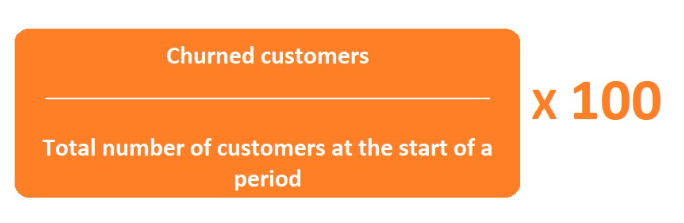
For more detail, see our guides on churn rate , Net Promoter Score and customer service metrics .
What is the difference between customer success and customer support?
Customer success vs customer support comes down to timing. Support reacts to problems that customers report, while success works ahead to help customers reach their goals. Support answers tickets, chats and calls, and success is measured on retention.
| Customer support | Customer success | |
|---|---|---|
| Approach | Reactive: the customer asks for help | Proactive: the CSM contacts the customer first |
| Main goal | Solve the current issue fast | Help the customer reach long-term results |
| Typical work | Tickets, live chat, calls | Onboarding, business reviews, renewals |
| Main metrics | First response time, resolution time, CSAT | Churn rate, NRR, health score |
| Time frame | One conversation | The whole customer lifecycle |
Both teams need each other. Read our full comparison of customer service and customer support for related roles.
How can a support manager work with a customer success manager?
A support manager and a CSM work best when they share customer information and agree on when support should alert success. Repeated tickets from one account, low satisfaction ratings or an angry escalation are signs that a CSM should step in.
- Share the ticket history. A CSM who sees every email, chat and call from an account can prepare better for a review. A shared help desk keeps that history in one place.
- Agree on alert signals. Decide which signals, such as three tickets in a week or a bad rating, should trigger a message to the CSM.
- Meet regularly. A short weekly meeting between support and success catches at-risk accounts early.
- Close the loop. When a CSM fixes the cause of repeated tickets, tell the support team so they can stop the same issue elsewhere.

LiveAgent brings email, live chat, calls and social messages into one help desk, so support and success teams can see the same customer history. See how it works on our customer success software page, or read how to build a customer retention strategy .
Next step
If you are hiring your first customer success manager, start with the job description template above and pick three KPIs to measure from day one. If your CSMs and support agents need a shared view of every customer, start your free LiveAgent trial and bring all conversations into one place.