The AI support paradox: why the best AI is the one that knows its limits?
AI handles 80% of support tickets, but the other 20% defines your brand. Find out how Hybrid Intelligence and seamless human handover can transform your customer experience in 2026.
AI
Customer Support
Human Handover
Automation
Business Tools
In the early 2020s, businesses rushed to automate everything. The goal was simple: cut costs and deflect tickets. But as we move through 2026, the data is telling a more complicated story. Yes, AI chatbots can now handle around 80% of routine enquiries on their own, but that remaining 20% of conversations? That’s where 80% of your brand’s emotional value lives.
Ignore the handoff between AI and human expertise, and you’re not just losing efficiency. You’re losing customers.
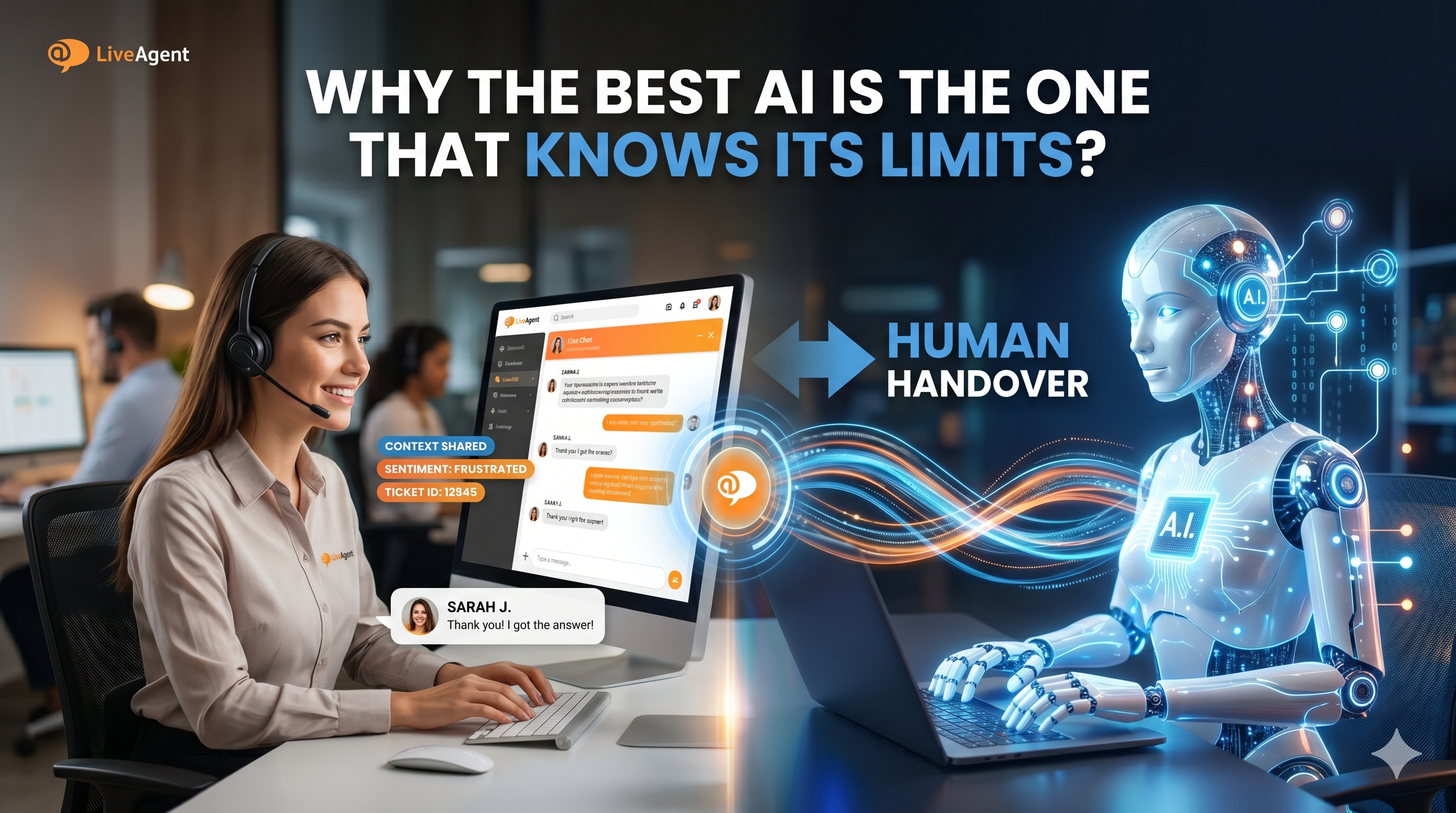
The most successful companies have moved past the “automate everything” mindset. They’ve landed on something more nuanced: Hybrid Intelligence. A model where AI brings the speed, and a real human brings the soul.
The new math of customer expectations
The all-or-nothing approach to AI is running out of road. Recent 2026 benchmarks show the gap between what customers expect and what automation actually delivers is getting wider, not smaller.
Take the resolution paradox. While 92% of customers are perfectly happy with AI handling fast, routine tasks, 85% still believe that complex or sensitive issues need a human to be resolved properly (Unthread
). Then there’s the churn penalty: one bad chatbot experience, usually the feeling of being stuck with no way out, is enough to lose 30% of your customers on the spot (Azumo
). And despite everything generative AI can do, 84% of consumers still trust a human agent more when things get genuinely complicated (SurveyMonkey
).
For business owners, these aren’t soft metrics. They’re financial warning signs. If your AI doesn’t know when to step aside, it isn’t an asset. It’s a liability.
What is “context debt” costing you?
The biggest source of friction in modern support isn’t the bot getting something wrong. It’s the messy handoff that comes after. Right now, only 15% of consumers say they’ve experienced a smooth transition from an AI bot to a human agent (Unthread
). Everyone else ends up repeating their name, their order number, and their entire problem from scratch. That’s what we call context debt, and it quietly bleeds your business dry.
When an agent picks up a conversation with zero context, it plays out in three ways, none of them good:
Ballooning handle times: agents spend the first few minutes catching up on what the bot already heard, cancelling out the cost savings of automation.
Agent morale taking a hit: one in three say they don’t have enough context to actually solve the problem after an AI handoff (Unthread
), which feeds directly into turnover.
Satisfaction scores nosediving: customer satisfaction drops by nearly 50% the moment someone is asked to repeat their story (Contentstack
).
Inside LiveAgent’s AI Human Handover feature
At LiveAgent, we don’t think of AI and humans as competing forces. We think of them as a team. The AI Human Handover feature
is the connective tissue that makes that team actually work, and it goes much deeper than a simple “transfer” button.
Two ways a handover can happen
One of the things that sets LiveAgent’s approach apart is that the handover can be triggered from either side of the conversation. There’s no single fixed moment where things switch over. Instead, the system gives both agents and customers the power to decide when it’s time.
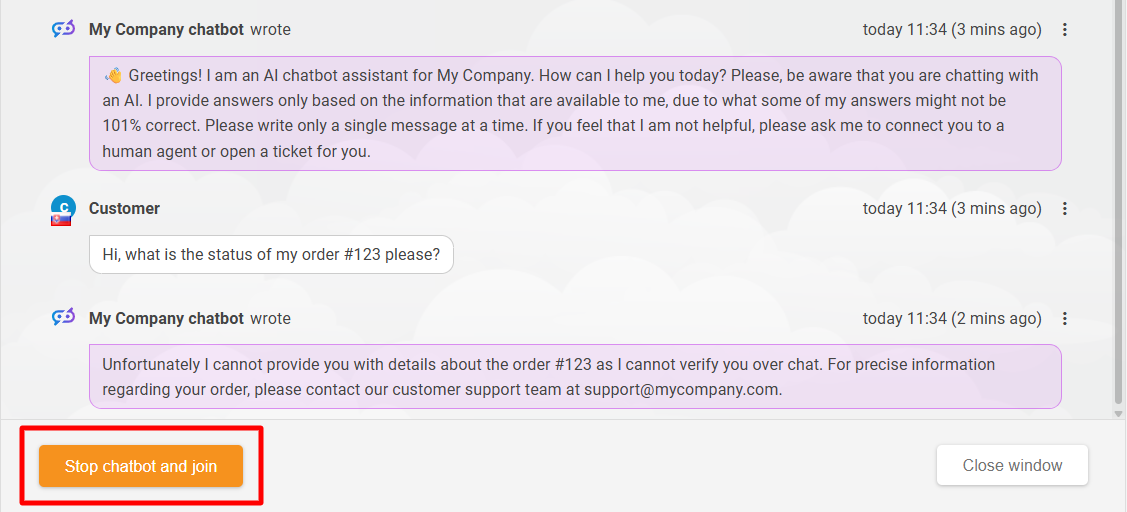
Agents can step in proactively. Every active chatbot conversation is visible to all support agents in the Chats overview section in real time. Agents can click the eye icon to open any chatbot ticket and monitor the conversation as it unfolds. If they see the bot struggling, or simply spot a customer who needs a human touch, they can click “Stop chatbot and join” and take over instantly. The conversation continues in the same chat window without any interruption. The customer simply receives a system message letting them know a human agent has joined.
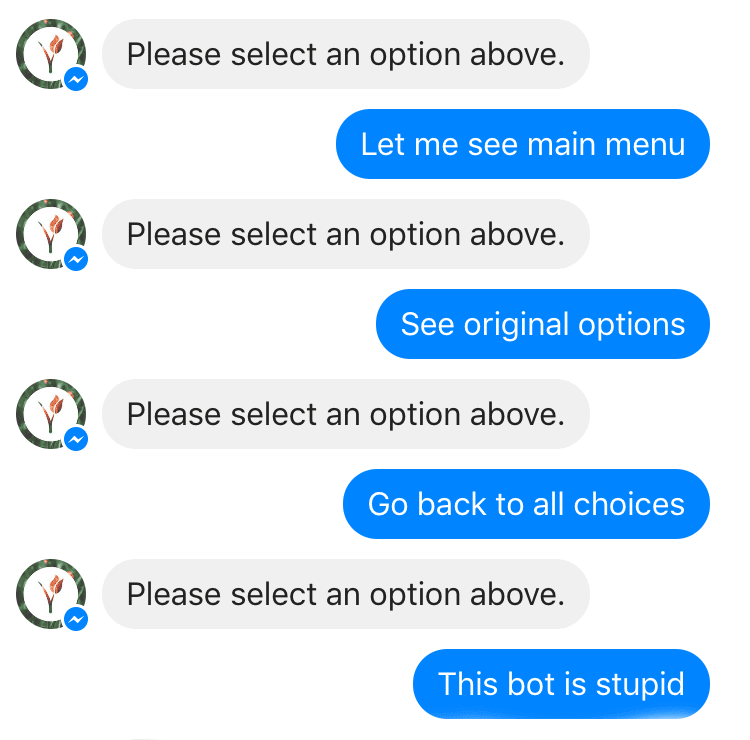
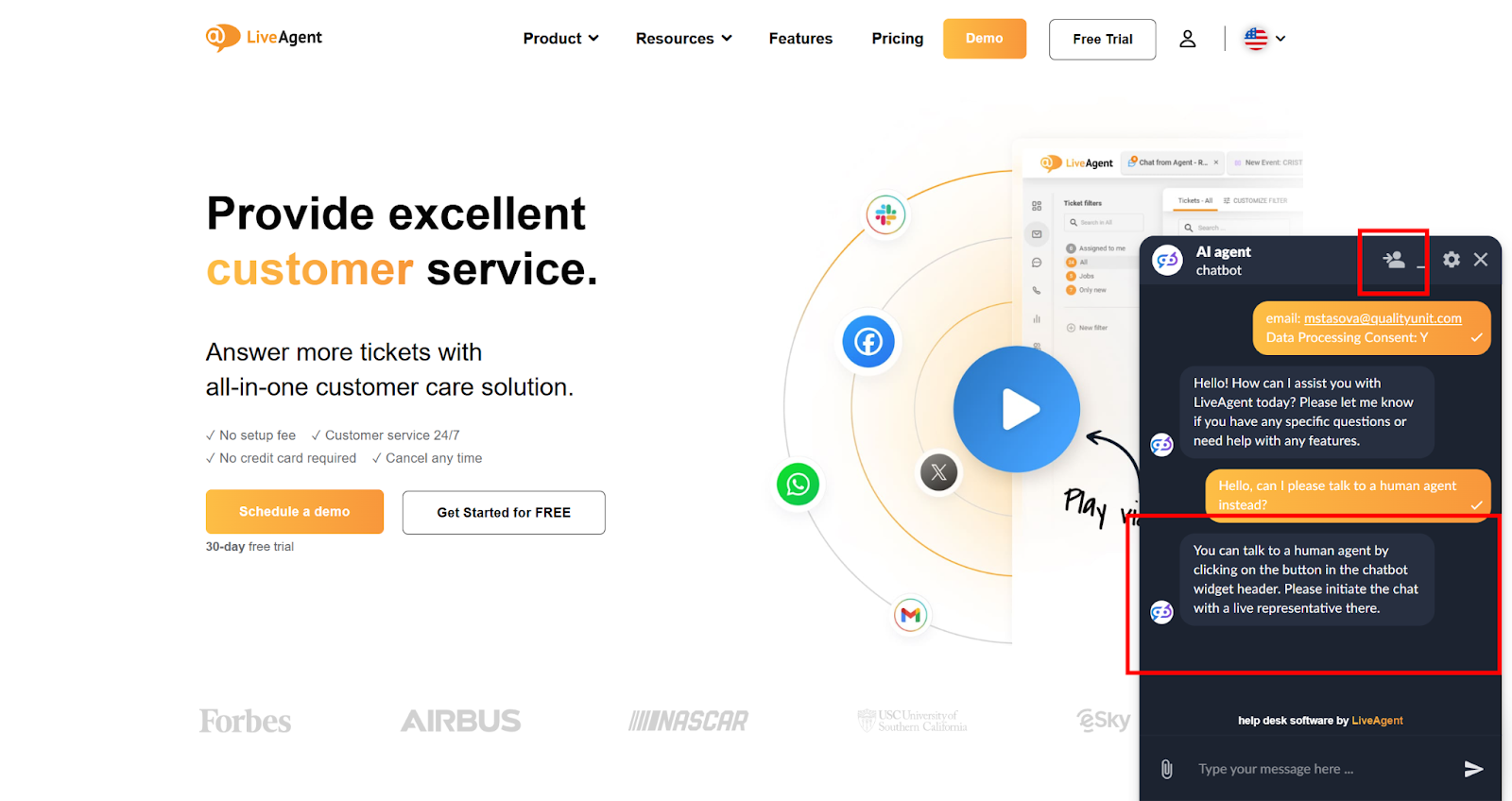
Customers can ask for a human themselves. While chatting with the bot, customers always have the option to click a “Request chat with human agent” button. This gives customers genuine control over their own experience, rather than leaving them trapped in a bot loop with no way out. The button appears after the chatbot has provided a configurable number of responses, which you can adjust to suit your workflow. If all agents happen to be busy at that moment, the customer joins the standard queue just as they would in a regular chat. No dead ends, no frustration.
Full conversation history, always intact
Whether the handover is agent-initiated or customer-requested, the complete conversation history carries over into the same chat window. The agent arrives with full context: every question the customer asked, every answer the bot gave, and the full thread of the interaction. They don’t need to ask “so what seems to be the problem?” They already know. They can pick up exactly where the bot left off and focus entirely on solving the issue.
This is the direct antidote to context debt. No repeated names. No re-explained order numbers. No starting from zero.
Smart escalation rules built in
Beyond the manual takeover options, LiveAgent lets teams define automated escalation rules so the right conversations reach a human agent without anyone having to monitor every chat in real time. You can configure triggers based on conversation content, sentiment signals, specific keywords (like “cancel,” “refund,” or “legal”), or the number of unresolved exchanges, so high-risk conversations are flagged and routed before they have a chance to go wrong.
Powered by FlowHunt
The AI side of LiveAgent’s AI handover system is powered by FlowHunt, a no-code AI automation platform built by the same team. This isn’t a bolted-on third-party integration. It’s a tightly connected system where the chatbot and the handover logic share the same infrastructure. FlowHunt lets you choose from multiple large language models, connect the bot to your own knowledge sources (including internal databases and documentation), and define the workflows and escalation logic without writing a single line of code.
Because both products come from the same company, teams get priority support and a free initial setup service for customers with active subscriptions on both platforms.
Language support across 40+ languages
AI Human Handover feature
works seamlessly across more than 40 languages. Whether a customer writes in French, German, Portuguese, or Japanese, the bot handles the conversation in their language and the full context carries over to the human agent in the same language. For businesses with international customer bases, this removes a second layer of friction that often gets overlooked.
What this looks like in practice
LiveAgent uses its own AI Human Handover feature
to run support across its own website, and the results speak for themselves. After deploying the AI chatbot with defined escalation rules across blog and glossary pages that were generating high volumes of off-topic and misrouted queries, the team resolved 75% of all chat interactions via the AI chatbot alone. The conversations that did reach human agents were the ones that genuinely needed them: real product questions, complex issues, and high-value customers who deserved proper attention.
Join our newsletter
The latest tips and deals delivered straight to your inbox.
The safety net ROI
Companies using this kind of hybrid model are seeing 148% to 200% ROI on their AI investment (NextPhone
). The reason is straightforward: they’re capturing the cost savings of automation without haemorrhaging value in the high-stakes conversations that actually define customer loyalty.
The 2026 competitive advantage
The question for business owners this year isn’t “should I use a chatbot?” That ship has sailed. The real question is: when your AI hits the edge of what it can do, how does your brand respond?
If the answer is an infinite loop or a dead end, you’re leaving money on the table. If the answer is a smooth, context-rich handover to someone who can actually help, you’re building the kind of brand people come back to.
Stop building walls. Start building bridges.
Ready to see the golden handoff in action? Explore LiveAgent’s AI Human Handover
Share this article
Lilia is a content manager at LiveAgent. Passionate about customer support, she crafts engaging content that highlights the power of seamless communication and exceptional AI-powered service.
Lilia Savko
Copywriter
Frequently asked questions
Hybrid Intelligence is a support model that combines AI automation with human expertise. The AI handles routine, high-volume queries quickly and efficiently, while human agents step in for complex, sensitive, or high-stakes conversations. The key is a seamless handover between the two, with full context passed along, so customers never have to repeat themselves.
AI can handle around 80% of routine support interactions, but the remaining 20% represents the majority of your brand's emotional value. Complex issues, frustrated customers, and sensitive topics all require human empathy and judgement. Without a reliable human fallback, businesses risk losing up to 30% of customers after a single bad bot experience.
Context debt refers to the lost information and friction created when an AI bot hands a conversation off to a human agent without passing along any background. The customer is forced to repeat their name, order number, and problem from scratch, which drops satisfaction scores by nearly 50% and wastes agent time re-learning what the bot already heard.
LiveAgent's AI Human Handover works in two ways. First, agents can proactively monitor all active chatbot conversations in the Chats overview section and click 'Stop chatbot and join' to take over at any time. Second, customers can click a 'Request chat with human agent' button to ask for a human themselves. In both cases, the full conversation history carries over into the same chat window with no repetition required.
Yes. While chatting with the AI bot, customers can click a 'Request chat with human agent' button at any time. This button appears after the chatbot has provided a configurable number of responses. If all agents are busy, the visitor joins a standard queue, exactly as they would in a regular chat session.
Companies using a hybrid model (where AI handles routine queries and humans manage complex ones) are seeing between 148% and 200% ROI on their AI investment. This is because they capture the cost savings of automation while preserving the high-value interactions that drive retention and loyalty.
Yes. LiveAgent's hybrid model starts at around $15 per agent per month and includes AI features across most plans. A free trial is available so businesses of any size can test the setup before committing. The ROI case is often strongest for smaller teams, where every lost customer and every wasted agent minute has a direct impact on the bottom line.
AI customer support assistant: the complete guide to modern customer service automation in 2026
AI customer support assistants use NLP and machine learning to resolve issues end-to-end, integrate with CRM systems, and operate 24/7. Learn what features matt...
Benefits of Chatbots: Top Business Examples & Use Cases
Discover how AI chatbots are revolutionizing business interactions, boosting efficiency, reducing costs, and delivering 24/7 customer support. Explore top benef...
11 min read
AI
Chatbots
+2
Cookie Consent We use cookies to enhance your browsing experience and analyze our traffic. See our privacy policy.