

In this article:
- What do you actually get from a free AI chatbot?
- What does a free chatbot not do?
- How does free compare to paid, side by side?
- Does paid mean cheaper overall?
- When does free stop being enough?
- How do you decide?
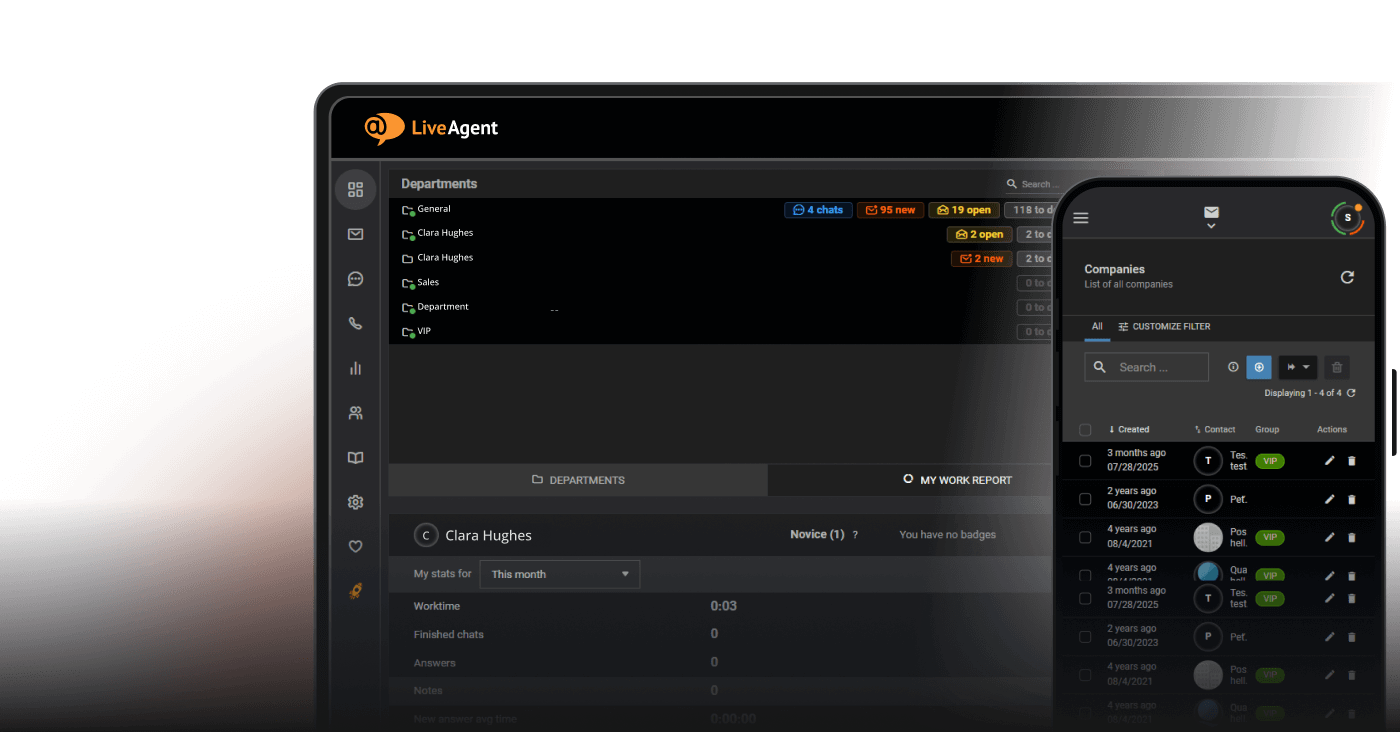
“Free AI chatbot” usually means one of two different things, and mixing them up is where most of the disappointment comes from. One is a general-purpose assistant like ChatGPT’s or Gemini’s free tier: genuinely smart, genuinely free, and not built for customer support at all. The other is a support-specific chatbot with a free plan or trial, built to sit in front of a ticket queue. Comparing either of those to a full paid support platform is a different conversation, and this article covers both.
LiveAgent is our product; this comparison covers it alongside general-purpose free tools.
What do you actually get from a free AI chatbot?
The current generation of free consumer chatbots is capable. OpenAI, Google, Anthropic, and DeepSeek all offer free tiers that handle general questions, drafting, and reasoning well, and for a single customer typing a one-off question, the answer quality is often fine. If your need is “answer a question well,” free general-purpose AI clears that bar.
What you get: a competent conversational partner, no cost, available immediately with no setup. What you don’t get is covered below, and it’s the part that matters for running support rather than answering one question.
What does a free chatbot not do?
Four gaps show up consistently, and they’re the ones that matter for an actual support operation rather than a single conversation:
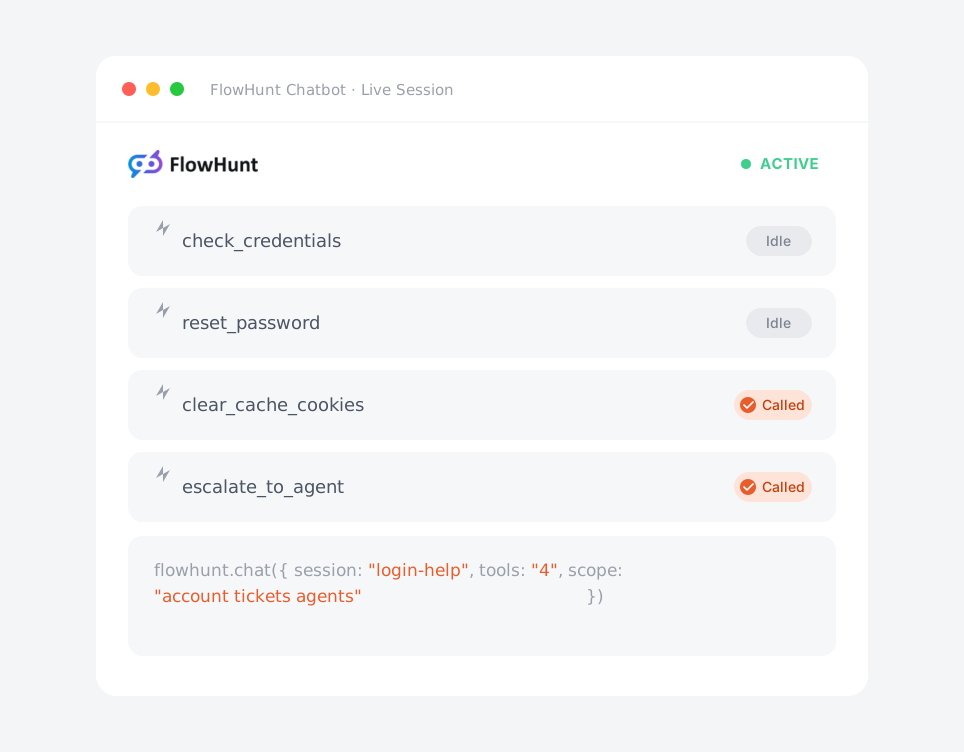
- No ticket integration. A free chatbot answers in its own window. It doesn’t create a ticket, doesn’t know a customer’s order history, and doesn’t hand a record of the conversation to whoever helps next.
- No escalation path. When the bot doesn’t know the answer, a free tool just says so. There’s no built-in handoff to a human agent with the conversation attached, so the customer has to start over somewhere else.
- No access to your own content. General-purpose free chatbots answer from their training data, not your documentation. They can’t reliably state your return policy, your current outage status, or a specific customer’s account details.
- No support guarantee. If a free tool has an outage, changes its usage limits, or gives a wrong answer during your busiest hour, there’s no SLA and no one to call.

Ready to grow your business?
Start your free trial today and see results within days.
How does free compare to paid, side by side?
| Free general-purpose chatbot | Paid, support-built chatbot | |
|---|---|---|
| Cost | $0 | Bundled with a help desk plan, or a standalone AI fee |
| Answers from your own content | No | Yes — trained on your knowledge base |
| Escalates to a human agent | No | Yes, with conversation history attached |
| Creates or updates tickets | No | Yes |
| Usage limits | Message/rate caps, can change without notice | Set by your plan, predictable |
| Support SLA | None | Included with a paid plan |
The free column isn’t a worse version of the paid one; it’s a different tool solving a different problem. The mismatch happens when a free general-purpose chatbot gets pressed into service as a support tool it was never built to be.
Does paid mean cheaper overall?
Not automatically, and this is worth being direct about. Gartner’s own forecast has generative AI cost per resolution rising, not falling, as use cases get more complex — potentially exceeding offshore human agent costs by 2030 (Gartner, January 2026 ). Paying for a chatbot buys you the four capabilities above, not a guaranteed cost win. The right comparison is resolution rate and agent time saved against what you pay, measured on your own ticket volume, not sticker price against sticker price.
Join our newsletter
The latest tips and deals delivered straight to your inbox.
When does free stop being enough?
Three moments tend to force the question, regardless of company size:
- Volume outgrows the free tier’s cap. Most free plans throttle usage; a support queue with real traffic hits that ceiling.
- A question needs your data, not general knowledge. “What’s my order status” isn’t answerable by a tool that’s never seen your systems.
- A conversation needs a human, mid-thread. Free tools have no handoff, so the customer repeats themselves somewhere else — the exact moment that damages the experience the chatbot was supposed to protect.
Any one of these is the practical signal to move to a support-built option, whether that’s a paid plan or a free trial of one.
How do you decide?
If your volume is low and questions are general, a free tool is a reasonable starting point; don’t pay for what you don’t need yet. Once ticket volume, account-specific questions, or escalation start showing up, weigh a purpose-built chatbot against your actual ticket data rather than the price tag alone. LiveAgent’s AI Chatbot is included from the $15/agent Small plan with full setup from $29/agent, and a 30-day free trial lets you test it against your own queue before deciding either way. If you’re still narrowing down which chatbot fits, our buyer’s checklist and our roundup of how the top options compared the top picks for 2026 cover the rest of the decision. If you’d rather build something yourself first to see what a chatbot needs to do, our guide on how to make your own AI chatbot walks through that path too.