


Open Ticket
Discover the power of open tickets in customer support software to effectively track and resolve customer issues. Learn how open tickets enhance communication b...
7 min read
Customer support
Ticketing system
+1

The ticket lifecycle includes stages from ‘New’ to ‘Resolved, and can be tracked using LiveAgent’s software. It offers features for detailed ticket tracking and reporting, enhancing customer service efficiency and satisfaction.

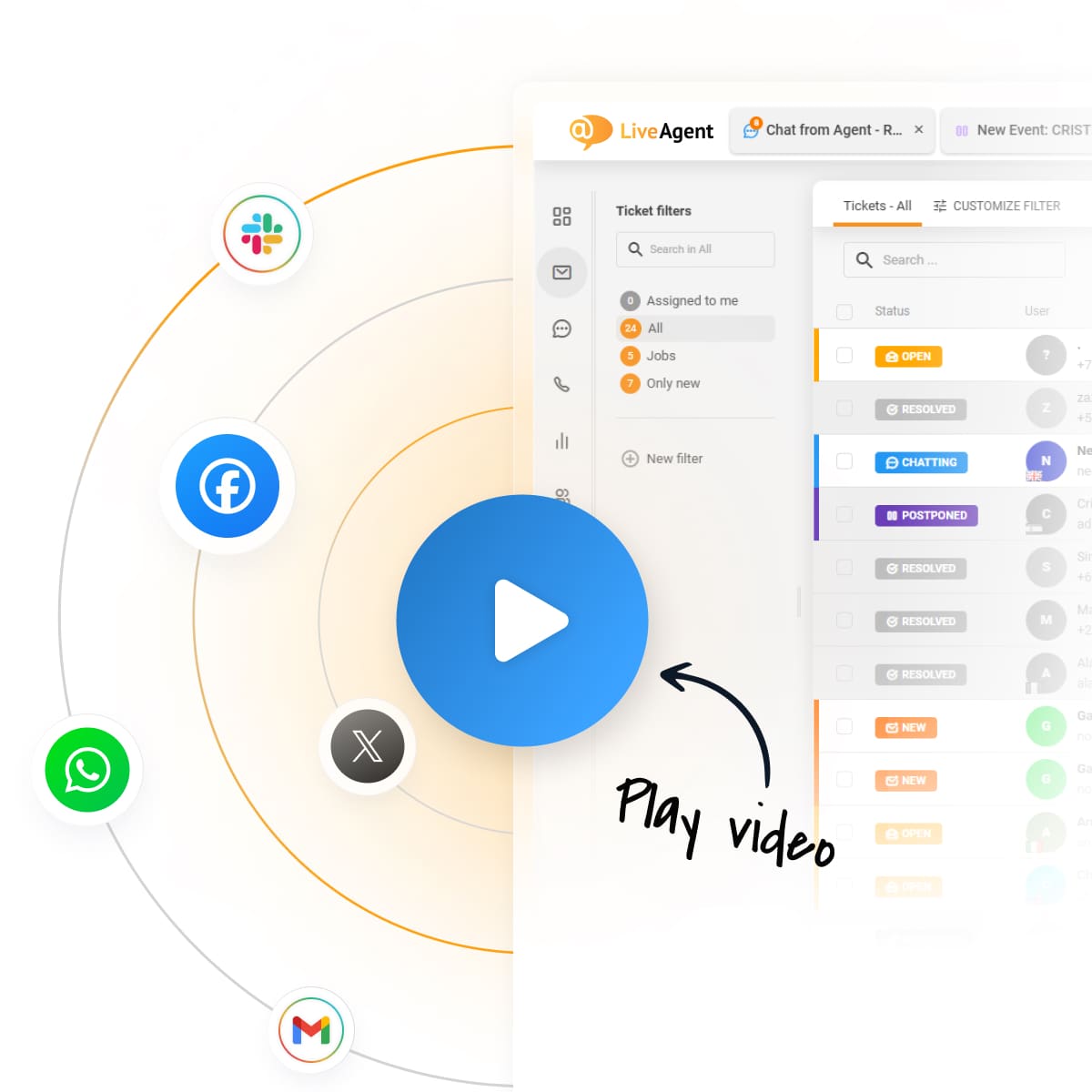
A ticket can go through various phases throughout its lifecycle. Typically when a ticket first comes in, its status is New. Once an agent answers the ticket, its status is changed to Answered. If a customer replies back to the same ticket, its status is changed to Open. After that, an agent can either answer the ticket again (and same process continues) or simply resolve the ticket and the status will be changed to Resolved.
Optionally throughout the ticket lifecycle, a ticket can be Postponed until later, Marked as Spam, Deleted or Purged.
All actions associated with a ticket are marked with a timestamp in the ticket thread. Keeping track of these timestamps can be very useful, especially if you need to access your online ticket history.

The term ’ticket lifecycle’ refers to the comprehensive process that a customer service ticket undergoes from its initial creation to its final resolution and closure. This concept is integral in customer service and IT support management, serving as a blueprint for how issues are reported, handled, and ultimately resolved. Understanding the intricacies of the ticket lifecycle is crucial for businesses striving to enhance customer satisfaction, boost service efficiency, and optimize resource allocation.
The lifecycle of a ticket is delineated by a series of stages that it traverses, each fulfilling a distinct purpose in ensuring that customer inquiries and issues are systematically and efficiently addressed. These stages facilitate tracking, managing, and resolving customer issues, thereby fostering improved service delivery and customer experience.
The ticket lifecycle encompasses several key stages, each vital for ensuring that customer issues are effectively addressed and maintaining a high level of customer satisfaction.
The lifecycle initiates when a customer submits a support request, thereby creating a new ticket within the system. This can occur through various channels such as email, phone, chat, or a self-service portal. Typically, the ticket is assigned a unique identifier to allow for seamless tracking of its progress.
Once a ticket is generated, it is assigned to an appropriate agent or support team based on the issue’s nature and the expertise required for resolution. This step is crucial for ensuring that the ticket is managed by the most qualified personnel, thereby expediting the resolution process.
The designated agent delves into the issue, gathering essential information and diagnosing the problem. This may involve analyzing logs, conducting tests, and engaging with the customer to gain a comprehensive understanding of the issue.
Following the diagnosis, the agent proceeds to implement a solution. This could involve providing instructions to the customer, applying patches, or making necessary adjustments to effectively resolve the problem.
After a solution is applied, it is rigorously tested to ensure that the issue has been resolved and no new problems have emerged. Verification is a pivotal step to confirm the efficacy of the resolution.
The agent communicates with the customer to verify that the issue has been resolved to their satisfaction. Customer feedback is essential to ensure that the solution aligns with their expectations.
Upon receiving customer confirmation, the ticket is officially closed. This stage involves documenting the entire process, including the resolution and any lessons learned, for future reference.
A post-incident review is conducted to analyze the ticket lifecycle, identify improvement areas, and prevent similar issues in the future. This stage is crucial for fostering continuous improvement in service delivery.
Effective management of the ticket lifecycle is paramount for several reasons:

Start your free trial today and see results within days.
Several tools and software solutions are available to help businesses manage the ticket lifecycle efficiently. These tools offer features such as ticket tracking, automation, reporting, and integration with other systems, thereby enhancing the overall service management process.
Platforms like Zendesk, LiveAgent, and Vivantio offer comprehensive solutions for managing support tickets, improving customer satisfaction, and streamlining workflow.
These systems convert customer communications into tickets, providing a structured approach to managing inquiries.
Modern ticketing solutions often integrate with other tools like Slack, Trello, and MailChimp, facilitating seamless workflow and communication across different platforms.
Track every stage from creation to closure with LiveAgent's intuitive ticketing system. Enhance efficiency, automate workflows, and improve customer satisfaction.
Discover the power of open tickets in customer support software to effectively track and resolve customer issues. Learn how open tickets enhance communication b...
Learn what a closed ticket means in customer support, its benefits, lifecycle, and how LiveAgent automates closure for better efficiency.
Discover the power of efficient ticket management with LiveAgent. Streamline customer support by converting issues into tickets, enhancing response times, and b...
Join our community of happy clients and provide excellent customer support with LiveAgent.
Cookie Consent
We use cookies to enhance your browsing experience and analyze our traffic. See our privacy policy.