


Customer Service Satisfaction
Boost customer service satisfaction with strategies, CSAT tools, and LiveAgent to exceed expectations. Learn how to measure and improve satisfaction metrics.
2 min read
Customer support
Customer satisfaction
+1

Discover customer satisfaction strategies to boost loyalty, retention, and brand reputation. Learn best practices and actionable tips today!
In today’s competitive market, customer satisfaction can be the difference between thriving or merely surviving. With countless options available to consumers, a single negative experience can lead them to switch brands in an instant. Understanding what drives customer satisfaction is crucial for businesses looking to maintain and grow their market share.
Customer satisfaction not only plays a pivotal role in reducing churn rates but also enhances brand reputation and boosts customer retention. Companies that excel in delivering exceptional customer experiences create loyal followers who advocate for their brand, leading to valuable word-of-mouth marketing. Recognizing the significance of customer satisfaction metrics like CSAT, NPS, and CES can help businesses track their performance and areas for improvement.
This article will delve into the importance of customer satisfaction and highlight best practices to elevate it. From gathering feedback to implementing a customer-centric culture, we’ll explore actionable strategies to enhance customer experiences. Notably, tools like LiveAgent can streamline the process, making it easier to meet and exceed customer expectations.
Customer satisfaction measures how well a company’s products and services meet or exceed customer expectations. It involves aspects like product quality, pricing, and customer service. To gauge customer satisfaction, companies often rely on feedback collected through surveys, ratings, and qualitative responses.
Understanding customer satisfaction is vital, as high satisfaction levels link directly to customer loyalty, increased retention rates, and repeat business. Companies can predict growth and revenue by monitoring customer satisfaction since it reflects purchase intentions.
The Expectancy Disconfirmation Theory underpins this concept. It explains that customer satisfaction results from comparing expected and perceived performance. When perceived performance aligns with or exceeds expectations, customers tend to be satisfied.
Here’s a quick overview:
| Aspect | Description |
|---|---|
| Product Quality | Performance and reliability of the product |
| Pricing | Affordability and value for money |
| Customer Service | Responsiveness and support quality |
Ensuring high customer satisfaction can transform customers into loyal advocates. Tools like LiveAgent can improve customer interactions, supporting businesses in addressing and solving related challenges effectively.
Low satisfaction can lead to complaints and negative reviews, ultimately resulting in the loss of business. On the other hand, high satisfaction enhances customer loyalty and encourages repeat business. Alarmingly, 57% of customers would switch to a competitor after just one negative experience. This statistic highlights the importance of achieving high satisfaction levels. By measuring satisfaction through surveys and feedback, businesses can pinpoint weaknesses and improve their services. Ultimately, retaining existing customers is more cost-effective than acquiring new ones, which emphasizes maximizing customer lifetime value through satisfaction.
Reducing customer churn is essential in today’s competitive market. Statistics show that 66% of B2B customers and 52% of B2C customers have stopped buying after a negative service experience. Therefore, it is crucial for the customer service team to exceed expectations to maintain high customer satisfaction (CSAT) scores.
These scores directly impact churn rates. Keeping customers satisfied often leads to higher retention rates. Satisfied customers stick around longer, fostering business stability due to the lower cost of retention compared to acquiring new customers. Engaging customers proactively, such as through effective communication during service disruptions, helps reduce churn. This directly influences revenue since happy customers are more likely to make repeat purchases.
Boosting customer retention by just 5% can lead to a profit increase ranging from 25% to 95%. The cost of acquiring new customers is about five times higher than retaining existing ones. This makes customer satisfaction a key economic factor for businesses. High client retention rates strongly indicate customer satisfaction, as they show a willingness of customers to continue partnering with the business.
Satisfied customers are not only more likely to make repeat purchases but also explore new offerings. This behavior directly benefits the company’s revenue stream. Proactive customer support and effective communication also aid in maintaining a stable customer base, especially in competitive markets.
High levels of customer satisfaction are crucial for growing companies as they significantly impact brand reputation. They shape how customers perceive the company and its offerings. Unhappy customers are often vocal about their negative experiences, potentially harming a brand’s reputation if issues remain unaddressed. By regularly measuring and tracking customer satisfaction, businesses can uncover areas needing improvement, directly enhancing brand reputation. Satisfied customers foster brand loyalty and serve as advocates, promoting positive word-of-mouth that bolsters the brand’s overall reputation. Leveraging customer feedback to enhance products and services can cultivate a positive image in the marketplace.

Using a tool like LiveAgent can support businesses in addressing customer satisfaction challenges efficiently. It helps improve customer interactions through better response times and personalized service, ensuring satisfied and loyal customers.

Start your free trial today and see results within days.
In today’s competitive market, understanding customer satisfaction is vital for business success. Customer satisfaction metrics provide insights that go beyond mere numbers. They help identify whether your products or services meet customer expectations and can drive your business strategy. Let’s dive into the key metrics that aid in measuring customer satisfaction.
The Customer Satisfaction Score (CSAT) captures customer satisfaction levels after recent experiences. Businesses ask customers to rate their experience on a scale of 1 to 5. Here’s how CSAT is calculated:
For example, if you have 200 responses and 160 customers gave a 4 or 5, your CSAT is (160/200) x 100 = 80%. A low CSAT can indicate a need for improvement. This metric’s simplicity allows businesses to quickly understand customer contentment and make necessary adjustments.
The Net Promoter Score (NPS) measures customers’ willingness to recommend your company to others, using a scale of 0 to 10. It’s calculated by:
For instance, if 60% are Promoters and 20% are Detractors, your NPS is 40. A positive NPS indicates happy and loyal customers. Companies frequently use NPS to boost team focus on improving customer satisfaction and fostering loyalty. Despite criticisms, it remains a popular metric.
Customer Effort Score (CES) assesses the ease of a customer’s experience in resolving issues. It’s calculated by averaging responses to a specific question about effort. Customers rate statements like, ‘The company made it easy for me to handle my issue."
Deploying CES surveys right after customer interactions helps capture real-time impressions. High CES scores signal that the company is providing an effortless customer journey, which can lead to increased loyalty.
Incorporating these metrics gives a well-rounded view of customer satisfaction. Combining CSAT, NPS, and CES can transform how businesses engage with their customers, ensuring they foster happy, loyal customers. Tools like LiveAgent can streamline this process, facilitating swift responses and fostering positive experiences.
Customer satisfaction is critical for any business aiming to retain loyal customers and expand its customer base. Satisfied customers are more likely to return, leave a positive review, and recommend your services to others. In this article, we will explore effective strategies to enhance customer satisfaction levels, with a focus on proactive support, meaningful feedback, and modern technology.
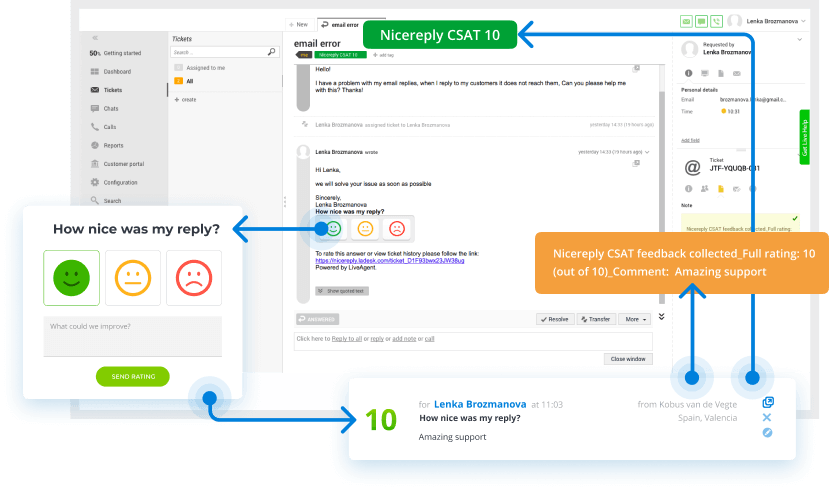
Feedback is vital for understanding the customer’s journey and making improvements. Companies should collect feedback while experiences are fresh. This can be done through real-time surveys, social media, and review sites. Avoid mistakes like asking questions too late or using unclear survey questions. Gathering insights promptly leads to action that can boost satisfaction and loyalty. Tools that analyze feedback from different sources give a wider view of customer sentiment, helping in making smarter business decisions.
Personalization is key to creating a positive experience. Customers enjoy when businesses remember their preferences, purchases, and past interactions. By using this information, agents can provide tailored support and recommendations. For example, using AI tools can enhance these interactions by offering dynamic and relevant experiences. Personalization not only builds trust but also makes customers feel valued and understood.
Proactive customer support can transform the customer experience. Instead of waiting for an unhappy customer to reach out, businesses should anticipate potential issues. For instance, sending an alert about planned service disruptions can prevent dissatisfaction. By addressing issues before they become problems, companies can provide exceptional customer experiences and make customers happy.

Technology plays a major role in improving customer satisfaction. AI chatbots can resolve common issues quickly, reducing response time and enhancing the overall experience. Integrating AI solutions with platforms like LiveAgent can increase productivity and tailor experiences to meet customer needs. Additionally, using metrics like the Customer Satisfaction Score (CSAT) and Net Promoter Score (NPS) helps measure and improve satisfaction levels effectively.
Crafting strong customer experience strategies is pivotal. Companies should continuously assess their satisfaction score to identify areas for improvement. By utilizing real-time feedback systems and conducting periodic surveys, businesses can align their services with customer expectations. Prioritizing fast response times and multichannel communication, such as live chat and social media, further enhances the customer experience.
Well-trained employees are essential for delivering exceptional service. Regular training on product features and problem-solving skills empowers agents to resolve issues efficiently. Many agents feel that additional training would enhance their performance, highlighting a need for continuous professional development. Sharing insights from customer feedback can also guide teams in delivering improved service.

Creating a customer-centric culture means embedding customer satisfaction into your company’s mission. Sharing customer feedback and successes inspires employees to focus on satisfaction in their roles. Cross-functional teams dedicated to this cause drive satisfaction initiatives effectively. By equipping agents with the right tools and fostering a collective responsibility, businesses can ensure that every interaction contributes to a positive customer experience.
In conclusion, improving customer satisfaction involves a blend of proactive support, personalization, and technology. LiveAgent is an exceptional solution for addressing these challenges by integrating tools to streamline support and boost customer satisfaction. Prioritizing these best practices can lead to loyal customers, positive reviews, and a strong business reputation.
The latest tips and deals delivered straight to your inbox.
In conclusion, customer satisfaction stands as a vital component in any business strategy. With the power to influence customer loyalty and retention, a high customer satisfaction score signals a thriving business. Conversely, dissatisfied customers can lead to negative feedback and increased customer churn, with studies showing that 57% of consumers may jump to a competitor after just one negative experience.
Key Takeaways:
To further enhance your customer experience strategy, consider trying LiveAgent. With a 30-day free trial, it’s the top choice for addressing customer satisfaction challenges by offering exceptional service and efficient response times. Ultimately, satisfied customers are the key to a robust and loyal customer base.
Handle all customer inquiries from one interface. Start improving your customer service with a 30-day free trial right away!
Boost customer service satisfaction with strategies, CSAT tools, and LiveAgent to exceed expectations. Learn how to measure and improve satisfaction metrics.
Discover how to effectively create, measure, and use CSAT surveys to enhance customer experience and drive business success. Learn best practices, formulas, and...

Explore the growing importance of customer service in enhancing customer experience. Learn 6 tips to boost satisfaction, retention, and revenue with effective s...
Join our community of happy clients and provide excellent customer support with LiveAgent.
Cookie Consent
We use cookies to enhance your browsing experience and analyze our traffic. See our privacy policy.