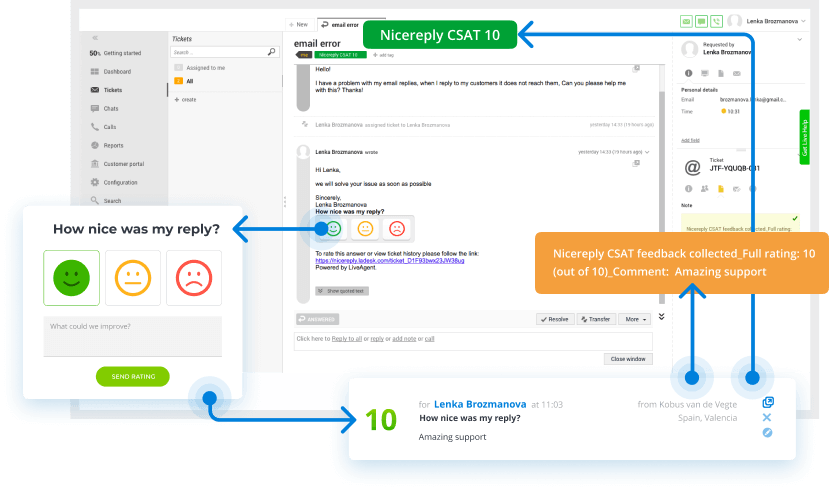
Customer feedback is vital for business growth, providing insights into customer experiences to improve satisfaction and loyalty. LiveAgent offers tools to gather feedback, enhance customer service, and streamline communication through features like email surveys and a feedback button.
Customer Feedback
Customer feedback is the lifeblood of any successful business, revealing insights that can propel growth. Understanding how your customers feel about your products or services is critical, as it not only influences their loyalty but also shapes your company’s strategies. In today’s competitive market, leveraging this feedback effectively can set you apart from the crowd.
There are various forms of customer feedback, ranging from structured surveys to spontaneous comments on social media. Recognizing the significance of both quantitative metrics, like Net Promoter Scores, and qualitative insights allows organizations to develop a comprehensive view of customer satisfaction. Moreover, employing channels like in-app prompts ensures that you connect with your users at the right moment.
In this article, we will delve into the importance of customer feedback and outline key strategies for effectively gathering and analyzing this information. We will also introduce LiveAgent as the best solution for managing customer insights, helping you build meaningful connections with your clients and drive business success.
What is customer feedback and why is it important?
Customer feedback is the information shared by customers about their experiences with a company’s products, services, or overall interactions. This feedback is crucial for identifying customer preferences and pain points that might be missed internally. Companies collect various types of feedback, such as satisfaction scores and reviews, to gain valuable insights.
Acting on customer feedback can improve satisfaction, reduce churn, and increase loyalty by addressing issues affecting the customer experience. Research shows that many consumers think companies should be more responsive to feedback, underscoring the need for strong customer engagement.
Businesses that effectively use customer feedback can align their products and services with customer needs. This alignment helps guide growth and success in a competitive market. Here’s why customer feedback is important:
Valuable insights: Offers insights into customer needs and expectations.
Enhanced satisfaction: Directly improves the customer experience.
By using tools like LiveAgent, companies can efficiently manage and act on feedback, ensuring a seamless customer journey and valuable, actionable insights.
Types of customer feedback
Understanding customer feedback means recognizing the various forms it can take. Feedback is vital for providing valuable insights into customer experiences, needs, and expectations. Companies typically gather feedback through both structured and unstructured methods, each offering unique perspectives.
Structured feedback
Structured feedback involves collecting data through predefined methods. This approach uses specific metrics to assess customer satisfaction and loyalty. Common measures include the Net Promoter Score (NPS®), which evaluates how likely customers are to recommend the brand to others. Here are some key points about structured feedback:
Metrics-based: Uses standardized questions for quantifiable data.
Benchmarking: Helps track performance over time and across different segments.
Actionable Insights: Facilitates precise analysis and strategic planning.
Structured feedback is favored for its ease of implementation and ability to generate clear, actionable insights. Tools like LiveAgent can enhance this process, allowing teams to streamline data analysis and devise improvement strategies.
Key metrics for measuring customer feedback
Proper management of this feedback can boost loyalty and increase chances of repeat purchases. Analyzing feedback using various metrics helps gauge customer experiences accurately. Prioritizing feedback involves assessing volume, potential impact, and opportunity costs of implementing changes based on insights. Using dashboards and AI analytics can streamline feedback analysis, offering actionable insights into common issues and sentiment trends. Here’s a closer look at the key metrics:
Net Promoter Score (NPS)
The Net Promoter Score (NPS) measures customer loyalty by asking a simple question: ‘On a scale of 0-10, how likely are you to recommend our product to friends or colleagues?" Its straightforward nature and quick completion make it a popular feedback survey metric.
Calculating NPS can be complex, so using a calculator or tool is advised for accuracy. A good NPS score aims for 30 or higher, though this varies by industry and product. Tracking NPS over time reveals trends in loyalty and satisfaction. Remember, it indicates what customers might say or think, rather than actual behavior.
Customer Satisfaction Score (CSAT)
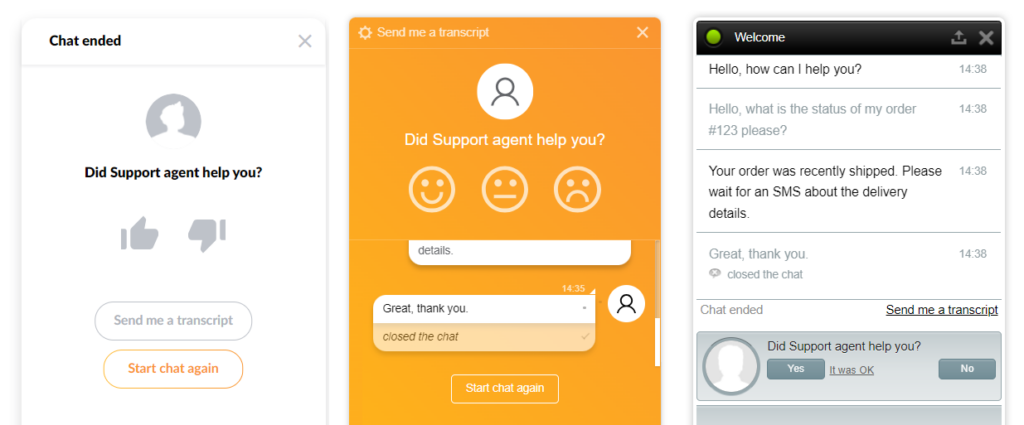
The Customer Satisfaction Score (CSAT) measures how satisfied customers are after interactions with your company. It’s often gathered at the end of live chats or after reading knowledge base articles. CSAT offers insights into happiness with response times, conversation quality, and follow-up communications.
You can implement CSAT using forms like HubSpot or Google Forms, typically rating from 1 to 10. Tracking CSAT alongside other metrics like Customer Lifetime Value (LTV) and NPS helps gauge loyalty and revenue impact. Feedback management software aggregates CSAT scores, merging them with other data for a comprehensive view of satisfaction and trends.
Customer Effort Score (CES)
Customer Effort Score (CES) measures how much effort customers exert to solve problems or complete purchases. It’s a common metric in evaluating feedback and satisfaction. Analyzing CES with other metrics like CSAT and NPS offers deeper understanding of customer experiences.
By understanding CES, organizations can pinpoint areas to reduce effort, boosting satisfaction and retention. Integrating CES with other metrics helps grasp how different user groups respond to various experiences.
In summary, tracking these metrics aids in crafting a better customer experience and helps businesses forge stronger connections with their customers. For effective feedback management, consider using tools like LiveAgent, which streamline feedback collection and analysis, offering robust insights for improving customer relationships.
Channels for collecting feedback
Gathering customer feedback is crucial for understanding your customers’ experiences and improving your services. Various channels can be employed, each offering unique advantages:
Live chat: Engage with customers directly and acquire immediate feedback.
Email follow-ups: Reach out after a service interaction to gather insights on customer satisfaction.
Knowledge base articles: Invite feedback on the helpfulness or clarity of support material.
Email surveys: Use one-click formats to streamline responses, though ensure execution to avoid low response rates.
Omnichannel integration: Seamlessly blend multiple touchpoints to create a full picture of customer sentiments.
Feedback tools: Automate and categorize responses efficiently using smart tags, enhancing analysis.
Surveys
Surveys have transitioned from intimidating, long forms to succinct and engaging formats. This evolution has improved response rates and made them less burdensome. They can be conducted through:
Feedback forms: Quickly gather opinions and suggestions.
Online surveys: Use website feedback buttons and email invites for broader reach.
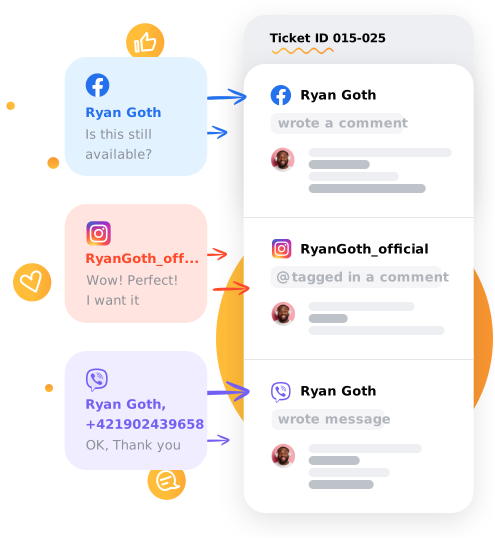
Social media: Leverage platforms like Facebook and Twitter to catch immediate reactions.
Customer feedback sampling: Acts as a rich resource for assessing customer satisfaction.
Enterprises like Netflix focus on direct feedback to refine their user experience, stressing the significance of customer insights in service enhancement.
Social Media
Social media is a dynamic platform for capturing customer feedback:
Posts, Polls, and Community Tools: Solicit active engagement and feedback through interactive content.
Monitoring Conversations: Go beyond tagged mentions; listen to organic discussions for authentic feedback.
Engaging customers on social media not only aids interaction but broadens the feedback collection process, helping businesses adjust service offerings.
In-App prompts
In-app prompts provide a seamless way to gather feedback right at the source:
Immediate feedback: Capture insights instantly after task completion to ensure relevance.
Discoverable widgets: Make feedback tools easy to find, encouraging user participation.
Open-Ended responses: Allow room for detailed user insights, alongside metrics like Net Promoter Score (NPS).
Tailored questions: Target feedback on specific app features or functionalities.
This real-time method enriches understanding of customer satisfaction, pinpointing areas for improvement.
For managing these channels effectively, LiveAgent is an excellent option. It integrates multiple feedback platforms into one cohesive system, simplifying the feedback loop and enhancing response rates. With LiveAgent, you’ll gather actionable insights, improve customer journeys, and increase loyalty among your customer base.
Join our newsletter
The latest tips and deals delivered straight to your inbox.
The customer feedback loop
The customer feedback loop is a strategic approach where businesses interact with their customers to enhance their products. By focusing on comments and reviews, businesses can identify areas to improve and create better customer experiences. This ongoing dialogue reveals hidden issues that internal teams might overlook. Addressing these insights is crucial in reducing customer churn. If customers are satisfied with the purchasing process, product quality, and after-sales support, they are more likely to stay loyal.
Effective feedback implementation can lead to improved products and foster a positive brand perception, resulting in increased loyalty and sales. Tools like LiveAgent can facilitate this process, making it easier for businesses to gather and act on customer feedback efficiently.
Establishing the loop
Establishing a customer feedback loop involves a continuous cycle of gathering, segmenting, and analyzing feedback. This ensures ongoing improvement. The first step is to gather as much feedback as possible, which helps identify areas for enhancement. Tools like surveys and online reviews are great ways to collect this data.
Next is segmenting the feedback, which means organizing it into categories to spot patterns. This helps businesses address the specific needs of different customer groups.
Finally, analyzing the feedback lets businesses see where customers are most satisfied or disengaged. This analysis facilitates targeted improvements to products and services. Balancing feedback collection with business objectives is essential for both customer satisfaction and organizational success.
Benefits of a feedback loop
Listening to feedback provides a reality check, offering unbiased insights into the customer experience. This not only leads to product improvements but also reduces customer churn, as satisfied customers are more likely to return and recommend the brand.
The loop fosters continuous improvement, creating a cycle that enhances both products and customer satisfaction over time. Establishing a robust feedback strategy cultivates a culture of adaptability, allowing businesses to swiftly respond to evolving customer needs and preferences.
Strategies for categorizing feedback
Effectively organizing customer feedback is essential for businesses striving to improve their products and services. Utilizing a feedback management system can greatly simplify this process. Here’s how you can categorize feedback for easier analysis and action:
Use specific categories: Organize feedback into categories like product performance, user experience, feature requests, and customer support.
Omnichannel survey solutions: Implement surveys across multiple platforms to streamline the feedback collection, ensuring no customer voice goes unheard.
Enhanced categorization: Utilize tagging and labeling with metadata such as customer demographics. This supports detailed analysis and more focused strategies.
Prioritization frameworks: Apply frameworks like the Urgent vs. Important matrix to address the most critical and actionable feedback first.
Integrate qualitative insights: Pair feedback with dashboards and AI analytics to understand customer preferences better.
Thematic analysis
Thematic analysis is vital for making sense of large volumes of customer feedback. This method involves sorting feedback into categories, such as product performance and user experience, which helps prioritize actionable items. Here’s how it works:
Qualitative and quantitative pairing: Use both types of data to gauge the urgency and impact of feedback themes.
AI tools and dashboards: Employ these for streamlined analysis, generating reports on common issues and trends.
Visualizations: Tools like heatmaps and sentiment charts highlight critical areas needing attention, helping track feedback changes over time.
Systematic approach: A structured analysis process provides valuable perspectives, aiding strategy development and enhancing customer experience.
Quantitative vs. qualitative analysis
Understanding customer needs requires balancing both quantitative and qualitative analysis. Here’s how combining these methods can offer a richer understanding of customer feedback:
Qualitative insights: These provide the ‘why" behind the numbers, revealing customer motivations and experiences.
Modern analytics tools: Tag and segment qualitative responses to study user behavior or plan follow-up surveys for deeper insights.
Customer interviews: By gathering stories, teams can challenge assumptions and complement quantitative data.
In-app surveys: Collect both qualitative and quantitative data in real-time, offering richer insights into customer sentiment.
Dashboards: Use them to leverage service metrics like Customer Satisfaction (CSAT) and Net Promoter Score (NPS) to find improvement areas.
By understanding how to categorize and analyze feedback, businesses can improve products and services, boosting customer satisfaction and loyalty. This structured approach ensures every voice is heard, all while paving the way for sustainable business growth.
Identifying trends and patterns
Spotting trends in customer feedback is crucial for maintaining customer loyalty. Start by measuring a baseline of customer happiness and track it at regular intervals. Centralizing your feedback data is key. Scattered information may lead to missed trends and unaddressed issues.
Tools for feedback analysis
Effective feedback analysis relies on the right tools. Customer feedback management software offers a comprehensive view of customer insights, making it easier to track satisfaction and NPS scores. With AI-powered analytics dashboards, businesses can quickly identify critical areas needing attention. These tools facilitate the visualization of feedback through heatmaps and sentiment analysis, shedding light on customer pain points and emotional contexts.
In-app feedback tools offer real-time insights from users directly interacting with your product or service. This immediacy ensures you capture authentic experiences, helping your marketing teams respond swiftly.
What to do with customer feedback
This process involves creating a customer feedback loop, which includes collecting feedback, segmenting it, analyzing the details, and making necessary improvements. Engaging with feedback drives data-driven decisions, leading to better products, increased revenue, and reduced churn rates. It also provides insights into customer preferences and areas ripe for innovation.
Acknowledging customer input
By weaving customer insights into your strategy, you foster a culture of continuous improvement. This environment can spark innovation, bring unaddressed needs to light, and create opportunities for new products or services. Engaging publicly with feedback strengthens the bond with your customers and shows that you value their experience. Plus, responding to negative feedback can enhance your brand’s reputation by demonstrating dedication to resolving issues.
Implementing changes
Once you’ve gathered feedback, the next step is implementing changes based on that input. This shows clients and customers that you strive to deliver top-notch solutions and keep client satisfaction at the forefront. After making changes, regular follow-ups ensure they’re meeting customer needs. It’s crucial to set clear goals that align feedback with your business’s overall strategy. This allows you to measure the success of the changes. Prioritize actionable feedback that promises the most significant impact. Transparency throughout this process helps maintain trust and loyalty with clients.
Driving improvement through customer feedback
Feedback management involves gathering and analyzing input from customers to enhance products and services. This process, known as Customer Feedback Management (CFM), is not just about collecting information but also about taking action based on customer insights. By integrating feedback into long-term strategies, businesses can better meet customer needs and drive continuous improvements.
One effective method for collecting feedback is active engagement, where companies directly ask customers for their opinions. This provides immediate insights into customer satisfaction and experiences. Using tools like automated surveys and social listening helps capture real-time feedback during key customer interactions. This ensures no valuable insights are missed.
Businesses can leverage the customer feedback loop to enhance their understanding of customer needs. This loop involves gathering feedback, making improvements, and then seeking further feedback. By genuinely engaging with customers and making the feedback process both easy and rewarding, companies can gather quality insights. These insights are crucial for business growth and fostering customer loyalty.
Enhancing product development
Customer feedback is invaluable for product development. It helps businesses prioritize initiatives that lead to desired outcomes. By understanding which feedback is urgent and valuable, product teams can focus on what truly matters.
Product analytics combined with customer feedback forms the backbone of a solid product roadmap. This informed planning sets a clear strategic direction for development efforts. When developing new product features, research should guide the identification of user problems and validation of feature ideas before investing in resources.
Integrating customer feedback into product development boosts customer satisfaction. It enables users to achieve more and enhances their workflows. By addressing feedback actively, companies can improve the buying process, product quality, and aftersales support, which reduces customer churn and boosts loyalty.
Improving customer experience
Customer Experience is pivotal to retaining and satisfying clients. Effective Customer Feedback Management (CFM) gathers, analyzes, and acts on feedback, ensuring businesses remain focused on customer needs. By understanding and addressing customer concerns, companies can significantly enhance client experiences, leading to higher retention rates.
For example, quick resolution of issues can win back disappointed clients and build lasting relationships. Repeat customers often make up 65% of a company’s business. Categorizing feedback based on demographics or themes helps businesses better prioritize improvements in customer service.
A successful approach includes acting on insights by working with relevant teams. Implementing strategies to enhance satisfaction and monitoring changes’ impacts is key. By focusing on the customer journey and ensuring a positive experience, businesses foster loyalty and satisfaction.
Measuring the impact of feedback strategy
Measuring the impact of your feedback strategy is crucial for business success. By transforming raw feedback into actionable insights, companies can enhance their products and services. Utilizing tools like dashboards and AI-powered analytics streamlines understanding customer sentiments. This drives continuous improvement in offerings.
The customer feedback loop is vital and includes four stages:
Asking for feedback
Categorizing it
Analyzing it
Taking action
Implementing this structured approach ensures effective use of customer insights.
A well-executed strategy improves customer satisfaction, reduces churn, and increases marketing ROI. Addressing concerns promptly boosts customer loyalty and retention. Using the Urgent vs. Important matrix helps prioritize feedback, allowing businesses to tackle critical issues first.
Here’s a simple table to summarize:
Stage
Action
Ask for Feedback
Surveys, Reviews
Categorize
Sorting, Prioritizing
Analyze
Dashboards, AI Tools
Act
Implement Improvements
LiveAgent stands as the best option for optimizing feedback strategies, providing tools that automate and simplify these processes. Implementing effective feedback systems ultimately benefits the entire customer journey.
Conclusion
Incorporating customer feedback into your business strategy is essential for success. It prevents costly mistakes by aligning product features with what customers truly value. A culture of continuous improvement, fueled by client insights, nurtures innovation and creativity. Additionally, feedback can uncover unmet needs and pain points, opening doors to new products and services that drive growth.
To streamline the process, establish regular review sessions, using predetermined questions to guide insightful discussions. This approach ensures that feedback is not only gathered but also utilized effectively.
Consider trying LiveAgent for a comprehensive solution that makes handling feedback easier. With its user-friendly customer feedback software, you can gather, analyze, and act on valuable insights efficiently. LiveAgent offers a 30-day free trial, allowing you to experience how it enhances your customer journey and bolsters customer loyalty.
By using feedback to shape your product roadmap and engage both happy and unhappy customers, you build a loyal customer base fueled by actionable insights. Remember, embracing feedback paves the way for continuous growth and exceptional customer experience.
Solicited feedback is when your brand reaches out to customers to get feedback. On the other hand, unsolicited feedback is when a customer is motivated to provide a review without any stimulus or suggestion.
Customer feedback can be given through diverse channels like online reviews, surveys, social media comments, email responses, or direct communication. This includes sharing opinions on a company's website, filling out post-purchase surveys, or directly reaching out via email or phone. All these methods allow businesses to collect valuable feedback to enhance their products or services.
Customer feedback in marketing provides valuable insights into customer preferences, needs, and satisfaction with products or services. This helps businesses tailor their marketing strategies to better meet customer expectations and improve overall customer experience. Positive feedback can also serve as powerful testimonials and endorsements, which can be leveraged in marketing campaigns to build credibility and trust with potential customers.
By gathering feedback, companies can understand what aspects of their offerings are working well and what areas need improvement. This helps in making informed decisions to enhance the overall customer experience. Feedback can also serve as a source of innovation and improvement. By understanding the pain points and preferences of customers, companies can identify opportunities for new product development or enhancements to existing offerings.
Customer feedback is the input, insights, thoughts from a customer about the company's services, products, and overall experience. Such information allows a brand to evolve and improve over time.
Positive customer feedback enables your brand to get organically recognized. For instance, through Google, Social media, etc. The same applies to negative feedback. It can make or break your business. Therefore, your company should focus on the whole customer experience, not only product development.
Customer feedback is crucial in fostering good relations, as it shows customers' opinions matter. This can be achieved by answering comments, sending thank-you notes, or amending services based on customer feedback. Genuine listening and demonstrating seriousness towards their inputs, like responding on social media and improving products or services, builds trust and loyalty.
What are customer insights, and how to use them to grow your business
Discover what customer insights are and how to use them to grow your business. Learn to gather, analyze, and leverage data for personalized marketing, improved ...
LiveAgent's feedback email templates help businesses gather valuable customer insights. The templates include subject line examples and customizable emails for ...
Learn to use feedback request emails to engage customers and improve marketing efforts. Discover templates for gathering feedback to build meaningful connection...
6 min read
LiveAgent
Email Templates
+1
Cookie Consent We use cookies to enhance your browsing experience and analyze our traffic. See our privacy policy.